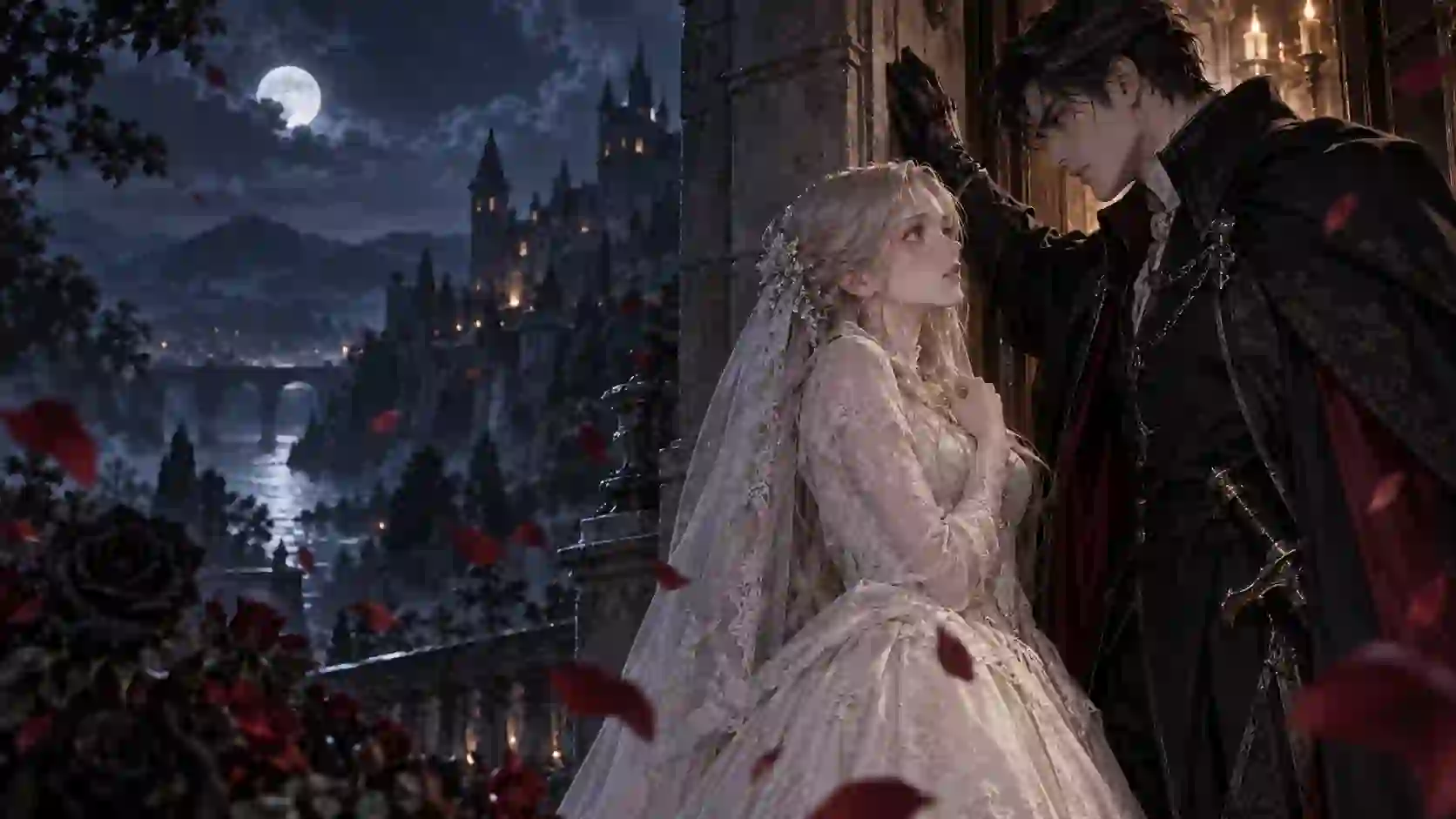
Imagine choosing a quiet country marriage to escape a fictional killer, only to meet that killer at the altar. That is Nadia’s nightmare in I Think I Married the Wrong Guy Manhwa, a romance-fantasy built on fear, mistaken identity, and a dangerous second chance. This guide gives you the verified premise, character map, chapter roadmap, official reading options, themes, and clear spoiler boundaries before you start reading.
What is the plot of the manhwa I Think I Married the Wrong Guy?
The story of I Think I Married the Wrong Guy Manhwa centers on Nadia, a lady who awakens in the setting of a dark novel. She knows that the story’s feared villain, Altair Gertrand, will eventually become a murderous duke. Her plan seems simple: leave the capital early, marry a poor baron in the countryside, and avoid the plot that leads to her death.
The plan collapses at the wedding. The man she married is not the harmless baron she expected. He is Altair before his rise to power, which means Nadia has stepped directly into the path she wanted to escape. Rather than running, she has to survive married life while trying to understand whether a person’s future can change.
The series mixes romance fantasy, novel possession, arranged marriage, character growth, social tension, and light comedy. Its central question is not only whether Nadia married the wrong man. It asks whether judging someone by a story’s ending can stop that person from choosing a different life.
Quick answer for new readers
Yes, this is a marriage-first romance with a fantasy survival hook. For readers searching for I Think I Married the Wrong Guy Manhwa by title, the emotional story develops through daily life, fear, miscommunication, trust, and the gradual shift from a defensive arrangement to a meaningful partnership.
- Main heroine: Nadia, a shy woman placed inside a novel.
- Main hero: Altair Gertrand, a country baron who is destined to become a feared duke in the original story.
- Novel inside the story: Betrayal of the Black Rose.
- Core trope: A heroine marries the future villain while trying to avoid him.
- Tone: Romantic fantasy with danger, awkward humor, political pressure, and emotional growth.
- Webtoon status: The official Korean comic listing records 80 episodes, with episode 80 marked as a Season 2 finale on Naver Series.2
- English availability: Tappytoon’s official page currently displays episodes 1 through 40 in its English catalog.1
- Original novel: The official Naver Series listing records 170 completed chapters.3
Why does this story attract romance-fantasy readers?
Nadia takes a logical choice that results in the worst outcome, which is why the hook works. She does not chase the most powerful man in the setting or volunteer for a grand adventure. She simply wants distance from a deadly plot, yet her escape route places her beside the person who controls that plot’s violence.
That reversal creates a strong source of tension. Nadia knows information that Altair does not know she has, while Altair’s behavior gives her reasons to question the future she remembers. Every ordinary conversation carries two meanings: what he says now and what she fears he will become later.
The series also lets the romance grow through proximity. A wedding does not instantly create trust. The couple must share a home, learn each other’s habits, handle outside judgment, and decide whether protection can exist without control.
What is the webtoon’s entire plot?
The opening begins with a woman who has read a bleak novel and then finds herself living inside it. She becomes Nadia, a minor character whose future is linked to the violence of the main villain. Because she remembers how dangerous the capital and its social world will become, she tries to leave before the original plot gathers speed.
Nadia chooses a marriage to a poor baron in the countryside. From her viewpoint, a remote estate offers three advantages: fewer nobles, fewer political traps, and more time before the villain’s story reaches her. She treats the marriage as an emergency shelter rather than a love story.
Her wedding day changes everything. Altair arrives covered in blood and carries the same frightening presence that Nadia associates with the novel’s future murderer. The man is not the obscure, powerless husband she thought she had chosen. He is the younger version of the very danger she hoped to avoid.
The plot then moves from escape to adaptation. Nadia must live beside Altair without revealing that she knows his future. She watches his words, studies his temper, and searches for evidence that the man in front of her is more complicated than the villain described in the book. That tension is the central reason I Think I Married the Wrong Guy Manhwa feels different from a simple “avoid the villain” story.
Altair has his own problem. He cannot understand why a woman from an important family would choose a poor country baron, especially when she appears afraid of him. Her nervousness creates misunderstandings, while his blunt manner often makes ordinary concern sound like a threat.
As the household grows more familiar, Nadia’s goal changes. She still wants to survive, but she also begins to question whether changing Altair’s path would erase the person he could become. The fantasy conflict therefore supports the romance instead of replacing it.
Who are the central characters?
The emotional core of I Think I Married the Wrong Guy Manhwa is provided by the character work. Nadia and Altair are not only a heroine and a love interest; each one carries a different version of the story’s future.
Nadia
Nadia is the viewpoint character and emotional anchor. Her greatest weakness is not a lack of intelligence; it is fear. She enters the story with limited confidence, but the narrative gives her room to build courage in small, believable steps.
Her knowledge of the original novel helps her recognize danger, yet it does not make her all-powerful. She can misread a situation, freeze under pressure, or act from incomplete information. That limitation keeps her survival plan tense and gives her character growth real weight.
Nadia’s most important development is learning to make choices for the life she is living now. She starts by reacting to a written future. Over time, she becomes more willing to speak, negotiate, protect her interests, and judge people by their actions rather than their assigned roles.
Altair Gertrand
Altair is the feared future duke and the man Nadia marries before he becomes the villain of the original novel. His reputation reaches the story before readers can fully understand him, which makes every early interaction uncertain.
He is intimidating, direct, and difficult for Nadia to read. At the same time, his actions create questions that the villain label cannot answer. The series uses that contrast to build the anti-hero and misunderstood-male-lead elements of the romance.
Altair’s arc is tied to choice. If he is destined to become cruel, Nadia wants to know why. If his future can change, the story must show that change through decisions, restraint, accountability, and relationships rather than a sudden personality swap.
The novel world
The setting is more than a backdrop. The capital, noble ranks, the countryside estate, reputation, wealth, and inherited power all shape the couple’s choices. Nadia cannot simply ignore society because she has left the capital; the rules of that society continue to reach her through visitors, rumors, status, and political expectations.
The entity map is clear: the primary story entity is the webtoon, the source entity is the completed Korean novel, the character entities are Nadia and Altair, and the fictional book entity is Betrayal of the Black Rose. The related topic cluster includes romance fantasy, isekai, transmigration, arranged marriage, future villain, shy heroine, love after marriage, and character redemption.
Why does Nadia think she married the wrong guy?
Nadia thinks she made a terrible marriage choice because she used the original novel as her safety manual. She expected a poor countryside baron and instead met Altair, the man whose future reputation makes him one of the most dangerous people in the story.
Her fear has four clear causes:
- She knows the ending of the original plot. Nadia remembers the destruction associated with Altair’s future.
- The wedding confirms her worst suspicion. His bloodstained arrival looks like proof that she has married the villain.
- He communicates badly. Short, severe statements leave too much room for Nadia to imagine the worst meaning.
- Her escape plan has reversed itself. She left the capital to avoid danger, but danger is now her husband.
The title is intentionally ironic. Nadia is not wrong that she married a frightening man. She may be wrong about what that man is capable of becoming in this new version of the story.
How does the romance develop after marriage?
The relationship begins with unequal knowledge. Nadia knows the future story, while Altair does not know why his new wife behaves as if every conversation could be fatal. That imbalance creates awkward scenes, but it also gives both characters a reason to pay close attention to each other.
Their first stage is cautious cohabitation. They must learn how to share rooms, meals, schedules, and responsibilities before they can discuss feelings. The domestic setting makes the relationship feel earned because trust grows from repeated conduct instead of one dramatic confession.
The second stage is mutual interpretation. Nadia starts noticing when Altair’s harsh words hide concern. Altair starts noticing that Nadia’s silence does not mean agreement. Their misunderstandings do not disappear at once; the story uses them to show why direct communication matters.
The third stage is partnership. Once Nadia begins acting from her own judgment and Altair begins making space for her choices, the marriage becomes more than a survival arrangement. The romance gains strength when both characters protect the other without removing the other’s agency.
This is why readers who enjoy “love after marriage” stories may connect with the series. The wedding starts the relationship, but emotional commitment has to be built afterward.
Which themes and tropes define the series?
Fate versus personal choice
Nadia enters a world with a known plot, but the webtoon tests whether knowledge of that plot guarantees the same ending. Her decisions create new consequences, and Altair’s actions challenge the idea that a future villain has no ability to choose.
Fear and courage
Nadia does not become brave by stopping fear. She becomes brave by acting while fear is still present. That distinction makes her growth easier to understand and gives the story an emotional center beyond the romance.
Marriage before love
The couple begins with a legal and social bond rather than emotional certainty. Shared responsibility becomes the bridge between them, allowing the romance to develop through ordinary moments and difficult decisions.
Reputation versus reality
Altair is judged by the future attached to his name. Nadia is judged by her family background, her marriage, and her visible shyness. The story repeatedly asks readers to compare public reputation with private behavior.
Communication and misunderstanding
Many conflicts grow because the characters do not say the most important part of what they mean. Nadia hides her knowledge, while Altair often speaks too bluntly. The tension is entertaining, but it also gives the relationship a practical problem to solve.
Character growth
The official series tags emphasize character growth, an anti-hero, another chance at life, a swordmaster, magic, monsters, and misunderstanding.1 Those labels point to a story that combines a relationship arc with a wider fantasy adventure.
Complete chapter detailing table for episodes 1–80
This I Think I Married the Wrong Guy Manhwa chapter guide is designed for quick navigation and spoiler control. The official webtoon listings confirm episode numbers and release information, but they do not provide full English synopses for every episode. The table below is therefore a spoiler-light editorial roadmap, not a scene-by-scene transcript or an official list of chapter titles. It helps readers see the story’s progression while avoiding invented dialogue and copied chapter text.
The numbering follows the Korean webtoon listing. English licensing can display fewer available episodes at a given time, so match the episode number on the platform rather than assuming that every edition has the same release point.
| Episode | Chapter focus and reader guide |
|---|---|
| 1 | Nadia enters the novel world and recognizes that the story around her ends in violence. |
| 2 | She forms an escape plan: leave the capital before the original plot begins. |
| 3 | The countryside marriage appears to offer safety, distance, and a manageable new life. |
| 4 | The wedding turns frightening when the groom arrives with the appearance of a killer. |
| 5 | Nadia connects the baron to Altair Gertrand, the future villain she knows from the novel. |
| 6 | The newlyweds leave the capital’s shadow, but Nadia remains alert to every warning sign. |
| 7 | Arrival at the estate introduces a new household, unfamiliar routines, and social rules. |
| 8 | Nadia learns that marriage requires daily cooperation, not only a legal agreement. |
| 9 | Staff, property, and local customs offer clues about Altair beyond his public reputation. |
| 10 | Nadia tries to establish a routine while hiding how terrified she is of her husband. |
| 11 | Altair’s frightening presence clashes with practical gestures that Nadia cannot easily explain. |
| 12 | A small test of trust gives Nadia a chance to act instead of retreating. |
| 13 | Her shyness remains, but she begins answering questions and expressing simple preferences. |
| 14 | The story explores what Nadia’s role as a baroness means outside the capital. |
| 15 | Shared domestic space creates closeness before either character is ready to name it. |
| 16 | An unexpectedly gentle exchange softens the distance between the couple. |
| 17 | Nadia’s knowledge of the original novel keeps her afraid even when the present seems calm. |
| 18 | She starts separating Altair’s current actions from the villain legend in her memory. |
| 19 | Romantic tension appears through proximity, embarrassment, and another avoidable misunderstanding. |
| 20 | Practical cooperation becomes more useful than grand promises or dramatic declarations. |
| 21 | Outside pressure reaches the marriage and reminds Nadia that the estate is not isolated. |
| 22 | Nadia must decide whether Altair’s intensity signals danger, protection, or both. |
| 23 | Hints of Altair’s past make the feared man more difficult to judge from appearances alone. |
| 24 | More direct communication removes one layer of the central misunderstanding. |
| 25 | Nadia realizes that survival is no longer the only reason she pays attention to Altair. |
| 26 | The estate, land, and title give the romance a wider economic and political dimension. |
| 27 | Rumors and class expectations test Nadia’s confidence in her new position. |
| 28 | A shared decision shows the couple beginning to operate as a genuine unit. |
| 29 | Attraction creates new boundaries and questions that Nadia’s original escape plan never covered. |
| 30 | Nadia considers whether changing Altair’s future is fair, possible, or necessary. |
| 31 | The story opens the couple’s world to regional nobles and public scrutiny. |
| 32 | Rank and reputation influence who is trusted, who is ignored, and who holds power. |
| 33 | Nadia’s growth is tested in public, where silence would be easier than participation. |
| 34 | Outsiders react to Altair’s reputation, giving Nadia a sharper view of his social danger. |
| 35 | A threat pushes the couple to respond together even though they disagree on methods. |
| 36 | Events echo the novel Nadia remembers, but her choices begin bending the expected path. |
| 37 | Altair’s actions carry more weight than the frightening stories told about him. |
| 38 | The estate’s safety depends on alliances that reach beyond the household. |
| 39 | Nadia acts with more courage than the timid version of herself she once expected to be. |
| 40 | Personal trust and outside danger converge, preparing the story for a larger phase. |
| 41 | The opening arc reaches a transition point as the marriage faces a wider question. |
| 42 | The next phase expands beyond first-marriage survival and raises the scale of the plot. |
| 43 | Changes to the original story create new opportunities as well as new risks. |
| 44 | Nadia and Altair must share information instead of protecting each other through silence. |
| 45 | Emotional honesty becomes harder to dismiss as affection becomes part of the marriage. |
| 46 | The couple weighs danger through evidence rather than relying only on Nadia’s old fears. |
| 47 | Nadia contributes decisions and plans instead of reacting only to Altair’s choices. |
| 48 | Altair’s restraint reveals how far he may have moved from the future Nadia remembers. |
| 49 | Social pressure tests whether the private bond can survive in public. |
| 50 | The central question shifts from escaping fate to choosing what kind of life to build. |
| 51 | A new complication exposes a gap in the couple’s communication. |
| 52 | Silence creates tension and shows why trust cannot grow without honest conversation. |
| 53 | The relationship begins repairing that tension through actions as well as words. |
| 54 | Nadia weighs Altair’s real identity against the reputation others expect him to carry. |
| 55 | The marriage becomes a mutual problem-solving partnership rather than a rescue arrangement. |
| 56 | Romantic warmth grows alongside the fantasy conflict, keeping both plot lines connected. |
| 57 | A threat beyond the estate prevents the couple from treating home as permanent protection. |
| 58 | Past wounds influence present decisions without completely defining either character. |
| 59 | Nadia’s courage grows while her gentle personality remains intact. |
| 60 | Altair’s response to conflict shows the cost and responsibility of changing his path. |
| 61 | Personal feelings and public consequences begin colliding more sharply. |
| 62 | Loyalty is tested as allies, obligations, and personal safety point in different directions. |
| 63 | Nadia and Altair stand together with fewer unspoken rules between them. |
| 64 | Old images of the villain return, but new context changes how Nadia reads them. |
| 65 | Emotional progress feels earned through accumulated choices rather than a sudden fix. |
| 66 | New information reframes an earlier assumption and gives the plot fresh uncertainty. |
| 67 | The characters face a decision between immediate safety and a more honest future. |
| 68 | Earlier choices affect both the household and the larger political story. |
| 69 | Nadia’s strength appears through judgment and persistence, not a sudden personality change. |
| 70 | Altair’s protective instincts are measured against Nadia’s need for autonomy and trust. |
| 71 | The story moves toward answers while keeping the couple’s future emotionally uncertain. |
| 72 | The shadow of the original novel becomes harder to ignore as fate pushes back. |
| 73 | The relationship must survive more than romantic uncertainty; external consequences now matter. |
| 74 | The narrative gives greater weight to what Nadia and Altair choose for themselves. |
| 75 | Personal and outside stakes move toward the season’s closing stretch. |
| 76 | Earlier promises, fears, and misunderstandings gain new meaning in the final run. |
| 77 | The webtoon tightens its focus on the couple’s future and the cost of their choices. |
| 78 | Remaining complications keep the outcome from feeling automatic or consequence-free. |
| 79 | The penultimate episode builds tension around the next emotional and plot answer. |
| 80 | The official listing marks this episode as the Season 2 finale; read it for the complete payoff. |
How to use the chapter table
Use the table as a navigation aid, not as a substitute for the comic. If you are starting fresh, read from episode 1 because the early misunderstandings explain why later trust matters.
If you are moving from an English release to the Korean listing, compare episode numbers and platform labels. Do not assume that the webtoon’s episode number matches the original novel’s chapter number; an adaptation can compress, expand, or rearrange material.
How many chapters are available, and is the story complete?
The official Naver Series comic page lists 80 webtoon episodes and identifies episode 80 as the Season 2 finale.2 That makes the Korean webtoon the best reference point for the current episode count, while regional services may release episodes on different schedules.
The English Tappytoon page currently presents episodes 1 through 40 and identifies the series as a romance title released weekly on that service.1 This does not mean the Korean webtoon has only 40 episodes; it shows that translation and licensing catalogs can move at a different pace.
The source novel is a separate reading experience. Naver Series lists the original novel as complete with 170 chapters and credits Kim Daham as writer and Sottan as illustrator.3 The webtoon is an adaptation, so readers should not use the novel’s chapter total as a direct map for comic episodes.
Where can you read it legally?
For English readers, start with the licensed Tappytoon page. It includes the official English title, creator credits, a series synopsis, episode access, and the platform’s own content guidance.1 If you searched for where to read I Think I Married the Wrong Guy Manhwa, this is the clearest licensed English starting point.
For the Korean release, use the official Naver Webtoon and Naver Series listings. Those pages provide the original title, creators, episode numbering, release information, and links to the related novel.2
A legal reading choice supports the writer, adaptation team, artists, translators, and publisher. It also gives you the cleanest episode numbering and the strongest chance of receiving future updates, corrections, and official extras.
Is the series worth reading without spoilers?
I Think I Married the Wrong Guy Manhwa is a good match for readers who enjoy a shy heroine, an intimidating male lead, a marriage-of-convenience setup, and romance that develops through shared life. The premise is easy to understand, but the emotional questions become more interesting as Nadia’s certainty about the original novel starts to weaken.
The strongest feature is the contrast between what Nadia expects and what she experiences. That contrast supports humor, suspense, and romantic tension at the same time. A small gesture can reassure her, frighten her, or reveal how differently the two characters understand the same situation.
Readers who want nonstop battles may find the early domestic pacing slow. The series spends time on social discomfort, household adjustment, reputation, and communication. That slower build is a strength if you prefer relationship development over instant devotion.
The official Tappytoon page advises parental guidance, while the Korean listing presents its own age and access information. Check the rating on the platform you use, especially if you prefer to know how a regional edition labels romantic or violent material.
Story entities and related search topics
A useful topical map keeps the main entity connected to the subjects readers actually search. For this series, the strongest supporting topics are:
- Title entity: I Think I Married the Wrong Guy.
- Original-title entity: 아무래도 결혼을 잘못한 것 같다.
- Character entities: Nadia and Altair Gertrand.
- Fictional-book entity: Betrayal of the Black Rose.
- Creator entities: Kim Daham, Sottan, villus, E en, sing-nanda, and the teams credited by each edition.
- Genre entities: romance fantasy, isekai, novel possession, arranged marriage, marriage after love, and character growth.
- Platform entities: Tappytoon, Naver Webtoon, and Naver Series.
These related terms help a reader understand the story; they should not be added as a list of disconnected keywords. A good page answers the questions behind the search, such as who Nadia marries, why Altair is feared, how many episodes exist, where the official English release appears, and whether the original novel is complete.
Frequently asked questions
1. Is I Think I Married the Wrong Guy Manhwa complete?
The Korean webtoon listing records 80 episodes and marks episode 80 as the Season 2 finale. The English Tappytoon catalog currently displays through episode 40, so availability depends on the platform and language.
2. What is I Think I Married the Wrong Guy Manhwa about?
It is a romance-fantasy story about Nadia, a woman inside a bleak novel, who marries a poor baron to escape danger and discovers that her husband is the future villain Altair Gertrand.
3. Who does Nadia marry?
Nadia marries Altair Gertrand. She believes she is marrying an obscure countryside baron, but he is the younger version of the man destined to become a feared duke.
4. Is the story a romance or a fantasy adventure?
It is both. The romance centers on marriage before love, while the fantasy plot adds fate, novel-world rules, social power, danger, magic, and the possibility of changing a villain’s future.
5. Is the original novel finished?
Yes. The official Naver Series novel page lists 170 completed chapters. That source material gives I Think I Married the Wrong Guy Manhwa a larger story foundation, but the adaptation should still be read on its own terms. Those chapters are the source material, not a one-to-one episode guide for the webtoon.
6. Where should I read the series?
Use Tappytoon for the licensed English edition and Naver Webtoon or Naver Series for the Korean release. Avoid unofficial scan sites because they can use incorrect numbering, incomplete translations, and unauthorized copies.
Final recommendation for new readers
Start with episode 1 and let Nadia’s fear make sense before judging her choices. The heart of the series is not the question of whether she made a bad marriage; it is the discovery that people, relationships, and futures can contain more than one possible story.
If the premise appeals to you, read through the official platform, bookmark the latest episode, and use the roadmap when you need to find your place. I Think I Married the Wrong Guy Manhwa rewards readers who enjoy patient romance, emotional change, and a villain-shaped mystery that becomes more human with every choice.