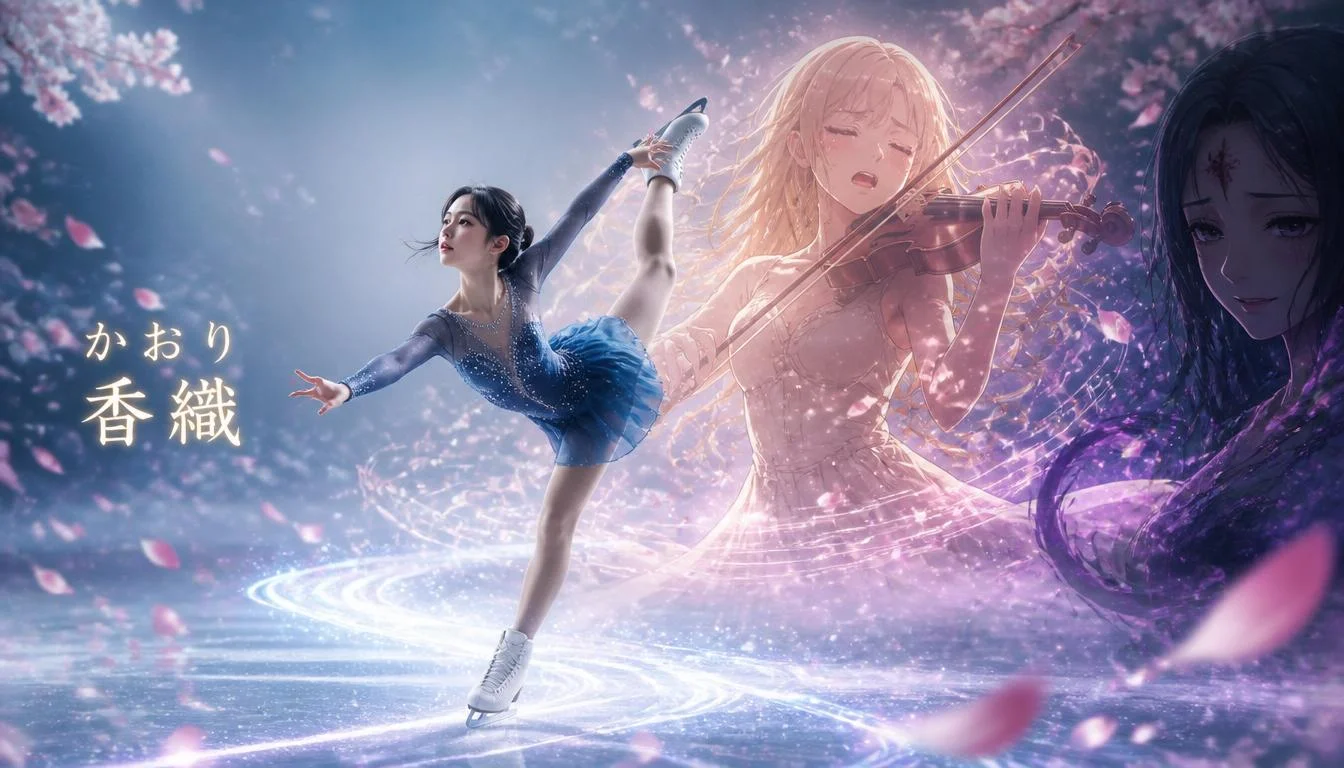
You type the name, and search engines toss back a figure skater, a pink-haired violinist, and a shadowy mother from a supernatural anime. That noise buries the gold. Kaori Sakamoto deserves clarity. This page cuts through the chaos. You will walk away knowing every detail about Japan’s skating champion, the rich meaning behind her name, and two other iconic Kaoris that captured global audiences.
Who Is Kaori Sakamoto?
Kaori Sakamoto is a Japanese figure skater who redefined women’s singles with explosive speed and deep edge control. Born on April 9, 2000, in Kobe, Japan, she started skating at age four. Her father, a former track and field athlete, encouraged her athletic path. Within a decade, she rose from local rinks to the top of the world podium.
She won the World Championship in 2022, 2023, and 2024. She also claimed the Olympic bronze medal at the 2022 Beijing Games. The Japan Skating Federation calls her one of the most consistent competitors in the sport’s modern era. Her career reflects raw power fused with artistic precision—a combination that coaches and analysts rarely witness.
Kaori Sakamoto’s Figure Skating Career: A Timeline
Early wins set the stage. Here is how her journey unfolded:
- 2013–2014 Season – Debuted at the Japan Junior Championships and placed inside the top ten.
- 2016–2017 Season – Won her first Junior Grand Prix medal in Slovenia.
- 2018 Four Continents – Claimed gold in her debut senior international championship.
- 2018–2019 Grand Prix Final – Secured fourth place, cementing her status among elites.
- 2022 Beijing Olympics – Skated two clean programs to earn the individual bronze and a team event bronze.
- 2022 World Championships – Captured her first world title with a personal best total score of 236.09.
- 2023 World Championships – Defended her title in Saitama, Japan, before a roaring home crowd.
- 2024 World Championships – Completed a three-peat, a feat not achieved by a Japanese woman in decades.
Each milestone built her reputation as a relentless competitor who thrives under pressure. Her trajectory shows no signs of slowing.
Signature Skating Style and Techniques
Kaori Sakamoto moves across the ice like wind channeled into a narrow canyon. Coaches describe her edge quality as “magnetic”—she bends deeply into curves and accelerates without visible effort. Her triple loop and double axel-triple toe loop combination earn +4 and +5 grades of execution consistently.
Three elements define her style:
- Deep Knee Bend – Generates massive speed out of step sequences and transitions.
- Core Stability – Keeps her axis tight during jumps, preventing under-rotations.
- Musical Phrasing – She lands jumps exactly on crescendos, a deliberate choice that choreographer Benoît Richaud molded over years.
Her free skate at the 2023 World Championships, set to “Elastic Heart,” demonstrated how she turns athleticism into storytelling. The performance earned a standing ovation and a cascade of perfect marks for interpretation.
Major Titles and Olympic Triumphs
A quick glance at her hardware reveals dominance across multiple seasons.
| Event | Medal | Year |
|---|---|---|
| Four Continents Championships | Gold | 2018 |
| Four Continents Championships | Gold | 2023 |
| Four Continents Championships | Gold | 2024 |
| Olympic Winter Games (Team) | Bronze | 2022 |
| Olympic Winter Games (Singles) | Bronze | 2022 |
| World Figure Skating Championships | Gold | 2022 |
| World Figure Skating Championships | Gold | 2023 |
| World Figure Skating Championships | Gold | 2024 |
| Japanese National Championships | Gold | 2019, 2022, 2023 |
She collects medals with quiet confidence. Olympic gold remains her next target, and she openly states that Milano Cortina 2026 sits firmly in her sights.
The Name Kaori: Origin, Kanji, and Meaning
Japanese names carry layered significance. Kaori (かおり) typically uses the kanji 香 (fragrance) combined with 織 (weave) or 里 (village). The most common written form, 香織, translates to “fragrant weave” — a poetic image of weaving a pleasant scent into fabric.
Other kanji combinations include:
- 佳織 – “excellent weave”
- 馨 – “fragrance” (standalone character)
- かおり (hiragana) – purely phonetic, often used for simplicity
The name meaning focuses on sensory beauty and quiet strength. It carries a classic, feminine elegance in Japanese culture, though modern parents often choose it for its timeless sound rather than any one meaning. Kaori Sakamoto’s given name, written in hiragana, keeps her identity approachable and free from rigid interpretation.
Kaori in Japanese Culture: Famous Namesakes
The name Kaori appears across entertainment, sports, and literature. Beyond the skating rink, two fictional characters shaped how international audiences experience the name.
Kaori Miyazono: The Violinist Who Touched Hearts
Kaori Miyazono is the central female character in Naoshi Arakawa’s manga and anime Your Lie in April (Shigatsu wa Kimi no Uso). She plays the violin with wild, emotional abandon, ignoring rigid performance rules. Her free-spirited approach collides with the protagonist Kōsei Arima’s mechanical piano precision, igniting a story of love, trauma, and music’s healing power.
Viewers remember her for:
- Performing the Kreutzer Sonata with deliberate tempo shifts that shocked judges.
- Her mantra: “We’re all afraid. But you have to be able to take that first step forward.”
- A luminous blonde aesthetic that contrasts with her deep emotional vulnerability.
Kaori Miyazono’s legacy endures because she represents living fully despite the knowledge that time is short. The anime’s final episode, aired in 2015, still generates millions of streams each spring.
Kaori Itadori: The Mysterious Mother in Jujutsu Kaisen
Kaori Itadori plays a minimal but pivotal role in Gege Akutami’s Jujutsu Kaisen. She is Yuji Itadori’s mother, a woman whose body became a vessel for the ancient sorcerer Kenjaku. This possession directly ties to Yuji’s supernatural birth and his capacity to contain Ryomen Sukuna.
Facts about Kaori Itadori remain sparse:
- She passed away before the main story begins.
- Her forehead scar becomes the mark of Kenjaku’s brain transplant technique.
- Flashback panels reveal a gentle smile that masks the horror of her fate.
The mystery surrounding Kaori Itadori fuels fan theories. Her name, ironically meaning “fragrance,” lingers over the plot as a ghost of normalcy Yuji can never reclaim.
Why the Name Kaori Inspires Strength and Grace
Names shape perception. Kaori evokes images of delicate aroma and woven threads—both require patience and inner fortitude. Kaori Sakamoto channels this duality on the ice: her skating appears weightless, but her training demands brutal physical endurance.
Parents who select this name often value subtle beauty over flashy power. The name’s quiet popularity in Japan mirrors the cultural preference for understatement that masks deep resolve. When you watch Kaori Sakamoto land seven triple jumps in a free program, you witness the name’s true spirit: fragrant but fierce.
How Kaori Sakamoto Trains for Global Competitions
Her training base sits at the Howa Sports Land Skating Rink in Aichi Prefecture. Coach Sonoko Nakano oversees daily sessions that blend on-ice drills, off-ice conditioning, and mental rehearsal.
A typical training block includes:
- 4–5 hours of ice time split into two sessions
- Jump rotation exercises using a harness to refine air position
- Ballet and modern dance classes for posture and extension
- Sprint intervals on land to mimic the cardiovascular demand of a four-minute free skate
- Video analysis with detailed biomechanical feedback
Kaori Sakamoto’s team prioritizes injury prevention. She wears custom orthotics and undergoes weekly physiotherapy. This meticulous preparation allows her to sustain the highest base-value jump content season after season.
Lesser-Known Facts About Kaori Sakamoto
Even devoted fans miss these details.
- She shares a birthday with American skater Nathan Chen (April 9).
- Her favorite food is yakiniku (grilled meat), which she indulges in after major competitions.
- She designed one of her exhibition program costumes, sketching the concept before seamstresses brought it to life.
- During junior years, she feared the triple salchow but now executes it as a reliable element in combination.
- She listens to Japanese rock band ONE OK ROCK to calm pre-competition nerves.
These snippets humanize the champion and show the person behind the podium poses.
Kaori Sakamoto’s Impact on Figure Skating’s Future
Young skaters now copy her deep edge drills and high-speed entries. The “Sakamoto effect” pushes the sport away from static jump setups toward fluid, uninterrupted movement. Judges reward her fully rotated jumps with high GOE, signaling a shift in how technical panels evaluate edge quality.
She mentors junior athletes during summer camps run by the JSF. When she speaks, she emphasizes joy over perfection—a message that resonates after years of seeing competitors burn out under rigid expectations. The next generation of Japanese women’s singles will carry her blueprint: attack every element with confidence and skate for the music, not the marks.
Comprehensive Comparison: The Three Kaoris
This table distills the core identities of Kaori Sakamoto, Kaori Miyazono, and Kaori Itadori.
| Attribute | Kaori Sakamoto | Kaori Miyazono | Kaori Itadori |
|---|---|---|---|
| Origin | Real life, Kobe, Japan | Manga/Anime, Your Lie in April | Manga/Anime, Jujutsu Kaisen |
| Role | Olympic figure skater | Violinist | Mother / Kenjaku host |
| Key Trait | Explosive speed & grace | Emotional, unorthodox musicality | Mysterious, tragic |
| Key Achievement | 3x World Champion (2022–24) | Inspired Kōsei’s return to piano | Gave birth to Yuji Itadori |
| First Appearance | 2013 Japan Junior Championships | Manga Chapter 1 (2011) | Manga Chapter 143 (flashback) |
| Legacy | Redefining women’s singles skating | Symbol of living passionately | Catalyst for the entire JJK plot |
| Kanji/Name Representation | Hiragana かおり | かをり (hiragana in official art) | 香織 (assumed, never confirmed) |
This side-by-side view clarifies why each Kaori matters in her own universe.
Frequently Asked Questions
Q: How many Olympic medals does Kaori Sakamoto have?
She owns two Olympic bronze medals—one from the team event and one from women’s singles at Beijing 2022.
Q: What does the Japanese name Kaori mean?
Kaori most commonly means “fragrance” when written with the kanji 香, sometimes combined with 織 to mean “fragrant weave.”
Q: Is Kaori Itadori alive in Jujutsu Kaisen?
No, Kaori Itadori died before the main story. Her body was taken over by Kenjaku, who used it to give birth to Yuji.
Q: What makes Kaori Miyazono a memorable anime character?
Kaori Miyazono’s fearless violin performances and her philosophy of embracing life fully, despite terminal illness, leave a lasting emotional impact on viewers.
Q: Where can I watch Kaori Sakamoto’s latest performances?
The ISU Skating YouTube channel and official Olympic broadcasts archive her competition skates, often with expert commentary.
Q: Which Kaori name meaning is most popular in Japan?
香織 (fragrant weave) ranks among the most popular kanji combinations for girls, though hiragana spellings remain common for simplicity.
Your Turn to Celebrate Kaori
Kaori Sakamoto’s triple world titles, Kaori Miyazono’s violin that broke every rule, and Kaori Itadori’s silent legacy—each Kaori brings something irreplaceable. Which story hooks you? Drop a comment, share this guide with a fellow figure skating or anime fan, or bookmark it for the 2026 Olympics. Real greatness deserves real conversation.
Sources:
- International Skating Union – Kaori Sakamoto Biography. ISU Official Site.
- Olympics.com – Kaori Sakamoto Results and Medal Table.
- Arakawa, Naoshi. Your Lie in April. Kodansha, 2011–2015.
- Akutami, Gege. Jujutsu Kaisen. Shueisha, 2018–present.
- Behind the Name – Kaori. www.behindthename.com (Accessed 2026).