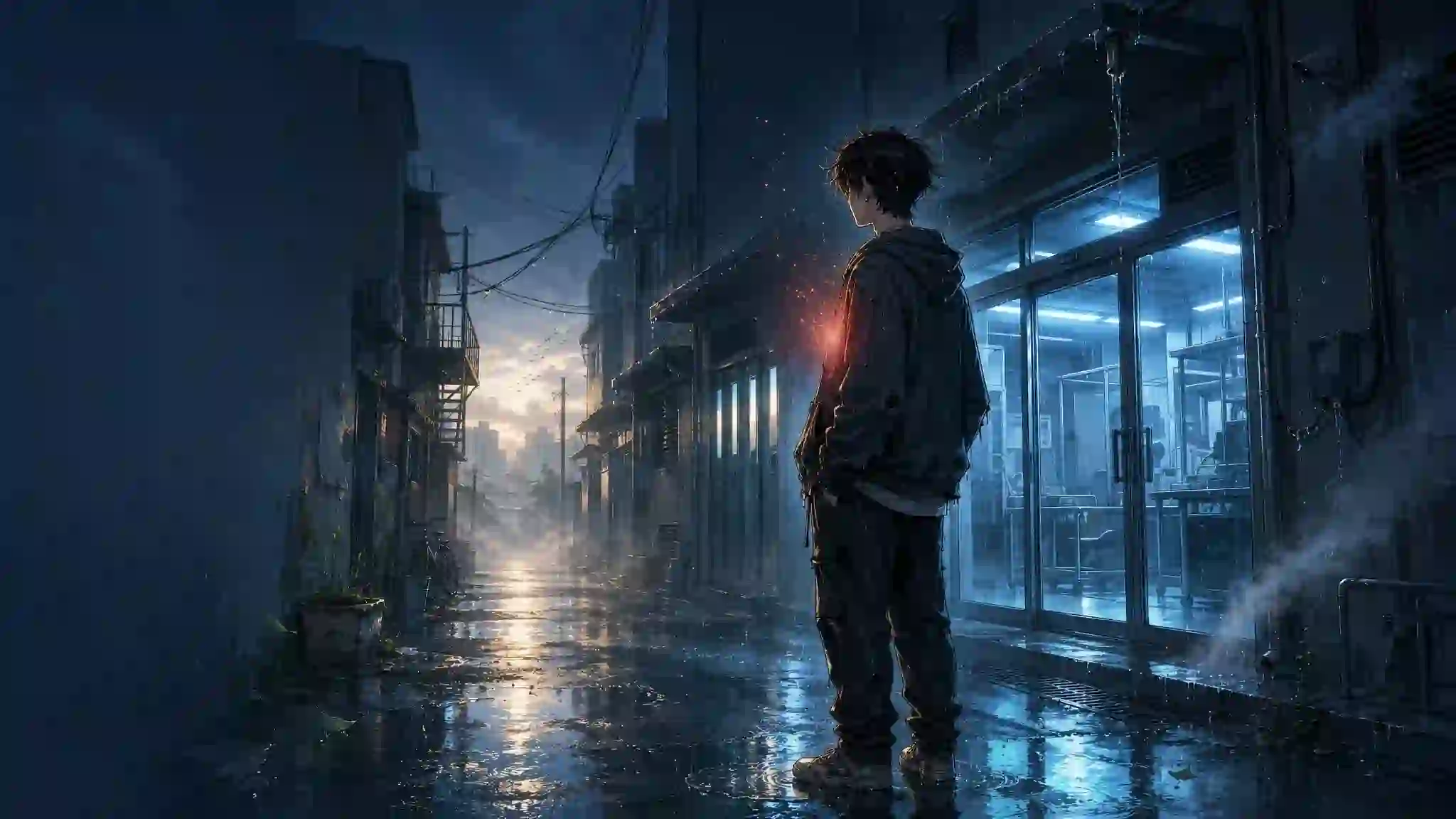
Ji-o has a heart that can bring him back from death, but survival is not the same as freedom. In Resurrection Boy, creator RYU turns that unsettling ability into the starting point for an action story about a young person escaping a laboratory, facing a life he never got to learn, and confronting the people who controlled him. This guide explains the official premise, main character, setting, themes, reading experience, and what new readers should know before starting—without giving away major plot turns.
What Is Resurrection Boy About?
Resurrection Boy is a Korean action webtoon, also described as a manhwa, created by RYU. Its Korean title is 부활소년. The official premise centers on Ji-o, a boy with the Heart of Resurrection. He has endured repeated deaths and escaped a research facility that suppressed his abilities and those of his friends. The laboratory remains a threat, and Ji-o begins moving toward it rather than simply trying to disappear.
That setup brings together supernatural action, survival, institutional abuse, friendship, and the difficult work of building an ordinary life after extreme harm. The central question is not only whether Ji-o can survive another attack. It is what he wants his life to mean when other people have treated his body and power as property.
The series is ongoing. The Korean and English editions may show different episode counts, release dates, access rules, or translated wording. Check the official edition available in your region for the current schedule and episode access.
Quick Facts About the Series
| Detail | Information |
|---|---|
| Title | Resurrection Boy |
| Original Korean title | 부활소년 |
| Creator | RYU (story and art) |
| Format | Full-color Korean webtoon / manhwa |
| Core genre | Action |
| Story setup | Ji-o has the Heart of Resurrection and escapes a research facility |
| Main conflict | A dangerous lab still threatens Ji-o and the people connected to him |
| Status | Ongoing; check the official edition for current episode availability |
| Best starting point | Episode 1 of the official series |
| Content note | Includes violence and disturbing material connected to experimentation; check the platform’s rating and episode notices |
Who Created Resurrection Boy?
RYU is the creator credited for the series on its official platform listings. The work is presented as both written and drawn by the same creator. That single creative voice matters in a story where character design, action staging, facial expression, and pacing all carry information alongside dialogue.
Readers who already know RYU’s earlier series may notice a familiar interest in action, unusual abilities, and characters pushed into difficult situations. Still, a new reader does not need to know any other work to follow this story. It introduces its own premise, cast, and stakes, so you can begin here without studying the creator’s previous titles.
A careful guide should separate confirmed series information from reader interpretation. The official description establishes Ji-o’s resurrection ability, the history of experimentation, and the research facility as a continuing threat. Ideas about the story’s eventual destination remain theories until the episodes confirm them.
Who Is Ji-o?
Ji-o is the central character. The official summary identifies him as a boy with the Heart of Resurrection who has survived repeated deaths and now moves toward the laboratory that restricted his and his friends’ abilities. That history makes him powerful, but it also leaves him with a life shaped by captivity rather than ordinary choices.
His appeal comes from the gap between what his body can do and what he has been allowed to learn. A character may be nearly impossible to kill and still be vulnerable in other ways: unfamiliar situations, incomplete trust, loneliness, and the challenge of deciding whom to believe. Ji-o’s journey asks readers to pay attention to both kinds of vulnerability.
His ability also creates a sharp story problem. If an injury can be healed or survived, then the writer must give each danger a reason to matter beyond the fear of death. The series can make that tension work through consequences, relationships, loss of control, the conditions around recovery, and the wider cost of violence. Watch how an encounter changes Ji-o and the people around him, not only who wins a fight.
What Is the Heart of Resurrection?
The Heart of Resurrection is the name given to Ji-o’s unusual power. In practical story terms, it allows him to return from fatal harm, making him an extraordinary survivor. The official series description also says his body can regenerate from injury. These details explain the broad premise, but they do not mean every limit or mechanism has been fully explained in the public synopsis.
That distinction matters for readers who want a clear power system. A series can reveal its rules gradually through events rather than provide a complete manual at the start. It is reasonable to ask what triggers recovery, how long it takes, what it costs, and whether the power has limits. Treat unanswered questions as open story questions instead of established facts.
The name “Heart of Resurrection” also works as a symbol. A heart usually suggests life, feeling, and connection. Here, it is tied to repeated physical trauma and to a body that others may want to control. The power can therefore feel like a gift in one scene and a burden in another, depending on who has control and what Ji-o must endure.
Why Was Ji-o in a Research Facility?
The official premise says Ji-o and his friends spent their lives under the control of a research facility that suppressed their abilities. It also describes a decade of brutal experimentation in the English platform summary. The laboratory is therefore more than a backdrop for action: it represents a system that treats young people as test subjects instead of people with rights and choices.
The story’s setup invites questions about consent, responsibility, and power. Who decided the experiments were acceptable? What did the researchers know? How did the facility keep its subjects contained? What obligations do people have when they learn that others are being harmed? The series can explore these issues through conflict and character decisions rather than a lecture.
The safest way to understand the facility is to stick to what the story has shown in the edition you are reading. Avoid relying on unauthorized summaries that may mix later spoilers with guesses. If you want to discuss the plot with others, note the episode number first so that readers can avoid revelations they have not reached.
Is Resurrection Boy an Action Webtoon or a Supernatural Story?
It is best described first as an action webtoon, with a supernatural power at the heart of its premise. The conflict with the facility gives the story a thriller-like engine: Ji-o has escaped, but the forces connected to his past have not simply vanished. His search for safety and answers can naturally create chases, confrontations, and changing alliances.
The supernatural element is not separate from the character drama. Ji-o’s ability affects how others treat him, what dangers he can face, and whether he can imagine a life beyond survival. The story can move between intense action and quieter adjustment without changing its central subject: a person trying to regain agency after others controlled his life.
Readers who enjoy only fast fights may find the emotional consequences important to the experience. Readers who prefer character-driven stories can still follow the action as the pressure that exposes relationships and choices. The mix is useful to keep in mind before starting, especially if you are choosing a series for a particular mood or age group.
Key Themes to Watch For
Survival and the cost of survival
A character who can return from death raises a different question from a conventional hero: what does survival take from him? Physical recovery does not automatically erase fear, pain, or the memory of being harmed. The narrative becomes more meaningful when it treats recovery as an event with emotional weight, not a reset button.
Freedom and self-determination
Escaping a facility is one step toward freedom, not a complete solution. Ji-o must find out what he values and how to make decisions outside the rules imposed on him. That process gives the story room to explore small choices—where to go, whom to trust, what to protect—as well as large acts of resistance.
Friendship and found support
The official premise includes friends whose abilities were also suppressed. Their experiences connect personal survival to a wider group. Support can help characters reclaim agency, but trust does not appear instantly. Notice what characters do for one another, how they respond to disagreement, and whether care is offered without demanding control in return.
Power, consent, and exploitation
A rare ability can attract people who want to study, use, or contain its owner. That conflict is central to the premise. The story’s ethical stakes turn on the difference between helping someone and treating them as a tool. Readers can assess characters by whether they respect choice, disclose important information, and accept responsibility for harm.
Identity after trauma
Ji-o’s past has shaped him, but it need not define every part of his identity. A compelling recovery arc allows a character to develop interests, humor, bonds, and goals beyond the trauma. Look for moments when Ji-o acts from preference rather than reflex, or learns something because he is curious rather than because he is under threat.
What Makes the Premise Stand Out?
The hook is easy to explain: a boy who can return from death escapes a laboratory and faces the people who suppressed his power. The emotional question underneath it is more layered. If survival was forced on him and his body was treated as an experiment, how can he decide what to do with his life now?
That contrast gives the action a personal stake. A conventional chase plot asks whether the hero will get away. Here, the story can also ask whether escape is enough, whether freedom can be built while danger remains, and how a person makes a future after being denied ordinary experiences. The premise links physical stakes to moral and emotional stakes.
It also gives the creator several ways to develop tension without making the main character suddenly powerless. Threats may come from the people around Ji-o, from the consequences of his past, from incomplete knowledge, or from choices where every option carries a cost. This keeps attention on character and consequence as well as ability.
Is Resurrection Boy Suitable for Younger Readers?
The official Korean listing gives the series a 15+ rating. That is a practical signal that it is not intended as a story for very young children. Its premise includes repeated death, experimentation, confinement, and action violence. The exact intensity can vary by episode, so parents and readers should check the platform rating, content notes, and sample pages before deciding.
A useful suitability check is to ask:
- Is the reader comfortable with violence and depictions of injury?
- Could stories involving confinement or human experimentation be distressing?
- Does the reader prefer a clear content warning before intense scenes?
- Is the edition’s age rating appropriate under local guidance?
Age ratings are guides, not personal guarantees. A teen who enjoys dark action fiction may be comfortable with material that another reader would rather avoid. If uncertain, preview the first episode and revisit the decision as the story develops.
How to Start Reading the Series
Start with episode 1 on the official platform. The opening establishes the Heart of Resurrection and the situation that shapes Ji-o’s choices. Reading in release order helps preserve reveals about his past, the facility, and the people who enter his life.
Keep these simple habits in mind:
- Choose the official edition for your language. Translation choices and release timing can differ between platforms.
- Read in order. Avoid jumping to a later episode summary if you want to preserve the intended reveals.
- Check access labels. Some episodes may be free, timed, or paid depending on platform and region.
- Use episode numbers in discussions. This makes spoiler boundaries easier to respect.
- Recheck the series page for updates. An ongoing webtoon can change its release schedule or availability.
There is no need to read another series first. You can explore RYU’s other work later if you enjoy the creator’s style, but this title is presented as its own story.
Is the Webtoon Ongoing, and How Often Does It Update?
The series is listed as ongoing. Release schedules and the newest available episode can vary by language edition, platform, and region. The Korean version may publish episodes before an English translation appears, and a platform may separate early-access or paid episodes from free episodes.
For the most accurate answer, open the official series page where you plan to read and check its latest episode date. Avoid trusting an old chapter-count article as a live tracker. Counts become outdated quickly, especially when a series has multiple language editions or early-access releases.
This also helps explain why readers sometimes report different chapter totals. They may be comparing different platforms, dates, or access tiers. When you ask whether a new episode is out, include the edition and date you checked so another reader can give a useful answer.
Resurrection Boy and Similar Manhwa: What to Compare
If you are deciding whether to add this title to a reading list, compare its core features rather than relying on a vague label like “action.” It combines a supernatural survival ability with a laboratory escape premise and a character’s attempt to reclaim a life beyond captivity. Those ingredients distinguish it from a school-fight story, a standard reincarnation plot, or a hero’s journey based only on training.
| Feature | What readers can expect from the premise | Helpful comparison question |
|---|---|---|
| Main ability | A resurrection heart and regeneration | Do you enjoy powers that affect the character’s identity as well as combat? |
| Main pressure | A research facility tied to past experimentation | Do you like stories about escaping an institution or uncovering its control? |
| Emotional focus | Recovery, trust, and a possible ordinary life | Do you want character growth alongside action? |
| Story status | Ongoing | Are you comfortable following a series as new episodes arrive? |
| Tone signals | Dark subject matter with action | Are confinement and injury themes okay for you? |
| Entry point | Episode 1 | Do you prefer to begin with a complete series instead? |
This comparison does not promise that every chapter will emphasize each element equally. It gives a grounded way to decide whether the series’ established setup matches your tastes.
Frequently Asked Questions
1. What is Resurrection Boy about?
It follows Ji-o, a boy with the Heart of Resurrection who escapes a research facility that suppressed his and his friends’ abilities. The story combines action with questions about freedom, survival, and rebuilding a life after experimentation.
2. Who is the creator of Resurrection Boy?
RYU is credited as the creator on the official series listings. The work credits RYU for both story and art.
3. What is Ji-o’s power?
Ji-o has the Heart of Resurrection, which allows him to return from fatal harm. The official English synopsis also describes his body as able to regenerate from injury. Specific rules and limits should be taken from the episodes as they explain them.
4. Is Resurrection Boy finished?
No. It is listed as ongoing. The latest episode and release schedule depend on the edition and region, so check the official platform for the current status.
5. Where should I read Resurrection Boy?
Begin at episode 1 on the official platform available in your region. Official editions provide the authorized translation and the most reliable episode information. Check local availability, age ratings, and free or paid access details there.
6. Is Resurrection Boy appropriate for children?
The Korean edition carries a 15+ rating, and the premise includes violence, death, confinement, and experimentation. It is better suited to readers who are comfortable with dark action themes. Adults should preview the edition and use their judgment for younger readers.
Start Reading With the Right Expectations
The strongest reason to try this series is its mix of a clean supernatural hook and a difficult human question. Ji-o can survive what would kill another person, but survival alone cannot give him a home, trust, or control over his future. The laboratory conflict supplies momentum; the character’s search for choice gives that conflict meaning.
If you enjoy action that leaves room for emotional consequences, begin at the first official episode and let the story reveal its rules in order. Check the rating and content notes before reading, choose the language edition you prefer, and share your thoughts with clear spoiler boundaries. A good discussion can focus on the question at the heart of the story: after someone takes away your choices, what does reclaiming your life look like?