INTRODUCTION
You've seen Sukuna mentioned everywhere — Reddit threads, Twitter arguments, Discord debates. But the real reason fans go wild is not the anime. It's the raw, precise, jaw-dropping sukuna manga panels that Gege Akutami draws by hand. These pages make your stomach drop. The problem? Most fans miss dozens of the best ones. This guide walks you through every iconic sukuna manga moment, what each panel means, and why they hit so much harder in black and white.
Why Sukuna Manga Panels Hit Different Than Any Other Villain
Most shonen villains get one or two memorable moments. Sukuna gets chapter after chapter of pure visual dominance. The sukuna manga panels work because Gege Akutami designs them with purpose — every line, every shadow, every expression carries intent.
Akutami uses negative space in ways most mangaka avoid. When Sukuna stands still in a panel, the emptiness around him feels more threatening than a crowded battlefield. Fans who jumped straight to the anime often miss this entirely. The anime adds color and music — which helps. But it also removes the silence that makes Sukuna terrifying on the page.
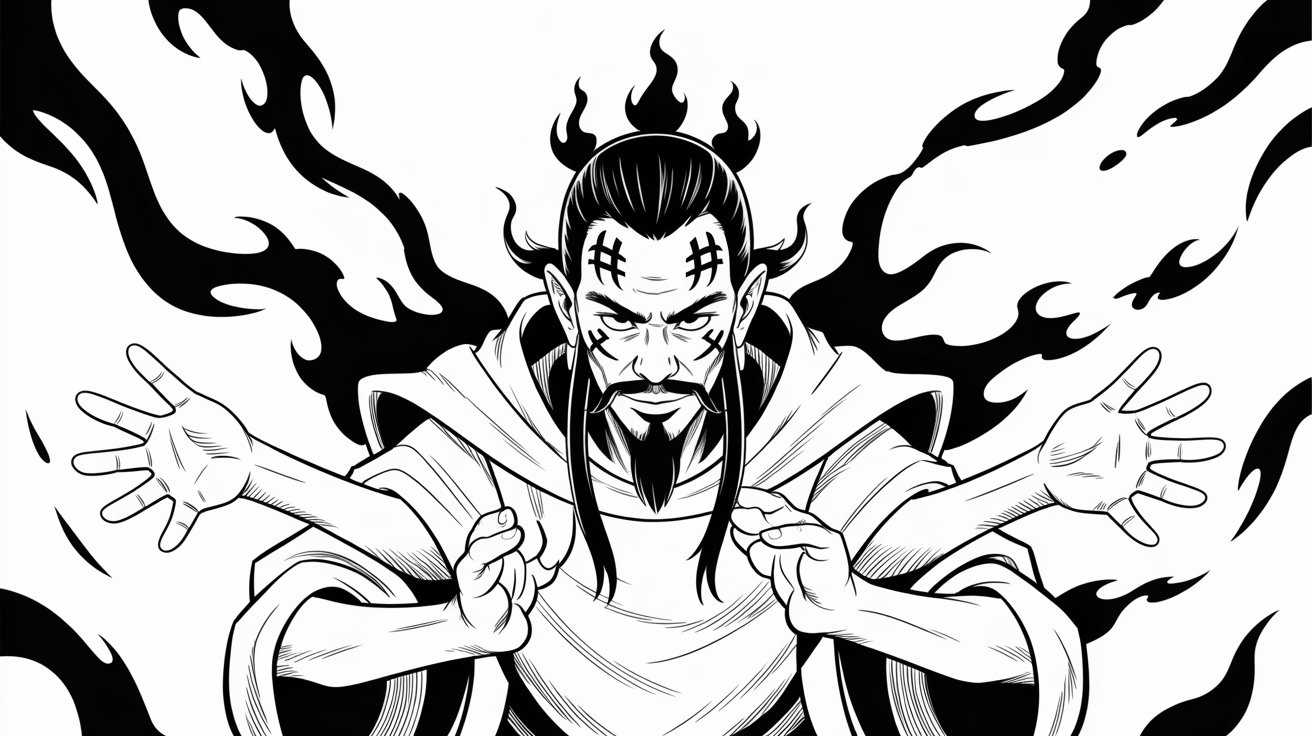
His four-armed, four-eyed original form — shown fully in later chapters — created one of the most discussed sukuna manga moments in fandom history. Multiple panels across dozens of chapters built to that reveal slowly, deliberately.
Expert Note: Manga critic Deb Aoki (Anime News Network) notes that high-contrast ink work during climactic fights serves as emotional shorthand — readers physically feel the weight of a strike through thick brushstroke shading. Akutami applies this technique better than almost anyone currently publishing in Weekly Shōnen Jump.
What Chapter Do the First Major Sukuna Manga Panels Appear?
The very first sukuna manga panels appear in Chapter 1 of Jujutsu Kaisen. Itadori Yuji swallows Sukuna's cursed finger, and within the same chapter, Sukuna temporarily takes control. The panel showing Sukuna grinning with those signature tattoos across his face became the image that sold the entire series to new readers.
Chapters 1 through 20 give you fragments — brief takeovers, sinister grins, taunting expressions. Akutami clearly planned the pacing. Every early sukuna manga panel plants a seed. By the time the Detention Center arc arrives, readers have built enough dread that Sukuna's full appearance lands like a punch.
The Chapter 10 binding vow sequence stands out as the first panel where Sukuna genuinely communicates his personality. He does not roar. He does not monologue. He smiles — and that smile in a single ink panel communicates more menace than most villains manage in 50 pages.
Malevolent Shrine Panel — The One That Made Everyone Stop Scrolling
The Malevolent Shrine domain expansion panel (Chapter 221 onwards) permanently changed how the community talked about sukuna manga panels. When Sukuna activates this domain, the art shifts completely. Akutami draws sharp, diagonal cuts radiating outward — not as motion lines, but as actual slices carving through the panel border itself.
This is the technical brilliance behind the best sukuna manga sequences. The destruction breaks the page layout. The cuts do not stay inside the panel box. They extend outward as if they're cutting the manga itself. That visual trick, borrowed partly from the avant-garde work of Hirohiko Araki (JoJo's Bizarre Adventure), became one of the most discussed panel techniques in manga community spaces that year.
"When a panel's art breaks out of the panel box itself, the mangaka is telling you: this power has no frame. It cannot be contained. That is exactly what Malevolent Shrine communicates in the sukuna manga panels."
Fans on Reddit's r/JujutsuKaisen shared scans of this sequence thousands of times. The hashtag #MalevolentShrine trended on Twitter in Japan within hours of Chapter 221's release.
Sukuna vs. Gojo — The Manga Panels That Split the Fandom
No arc generated more discussion around sukuna manga panels than the fight against Satoru Gojo. Chapters 221 through 236 contain some of the most technically complex action panels Akutami has ever drawn. The choreography covers multiple panel sequences that show spatial awareness, technique interaction, and raw power in ways that required three separate reads to fully understand.
The standout moment — Chapter 236 — became one of the most downloaded manga pages in Jujutsu Kaisen's history. The community split hard on what the panels actually showed, and that debate pushed people to zoom into every ink line looking for clues.
What makes these sukuna manga panels technically special is the use of overlapping panel gutters. Akutami places action sequences where two panels share the same visual space, forcing your eye to process both movements simultaneously. It mimics the disorientation of actually watching two godlike beings fight at speed.
Top Sukuna Manga Panels from the Gojo Fight — At a Glance
Chapter 221 — Domain vs. Domain Opening Clash
The moment both domains activate simultaneously. Akutami draws overlapping architectural imagery showing both realms trying to overwrite each other. One of the most compositionally ambitious pages in the series.
Chapter 229 — Sukuna's Four-Arm Reveal (Partial)
The first partial reveal of extra limbs mid-combat. Shadow work here is exceptionally detailed — fans called it the best ink shading in the entire manga run up to that point.
Chapter 235 — The Grinning Full-Page Panel
A full page of Sukuna's face, ink-heavy and composed. No action. No dialogue. Pure dread delivered through expression alone. It's the calm before everything changes.
Chapter 236 — End of the Battle
The most-shared single page in Jujutsu Kaisen history. Intentionally sparse art — Akutami strips everything back to let the reader feel the silence left behind.
How Gege Akutami Draws Sukuna Differently From Every Other Character
Studying sukuna manga panels closely reveals a consistent pattern. Akutami draws Sukuna's eyes with more deliberate ink weight than any other character. Most JJK characters have thin, flexible linework. Sukuna's eyes — whether two or four — carry thicker outer lines. This creates a subtle visual heaviness that reads subconsciously as ancient and dangerous.
His tattoo patterns serve as a second language in the art. When Sukuna's tattoos appear more prominently in a panel — when Akutami takes extra time to ink the geometric markings across his face and body — it signals something important is about to happen. Fans who study the sukuna manga art carefully have documented this as a consistent visual telegraph throughout the series.
Key drawing differences across sukuna manga panels:
- Sukuna's speech bubbles use angular tails — pointing to him like accusations rather than gentle dialogue indicators
- Background detail drops sharply when he speaks — Akutami removes visual noise so the eye focuses entirely on the character
- His posture in panels almost always places him slightly lower in the frame — making him feel grounded, immovable, ancient
- Cursed energy around Sukuna appears as sharp geometric fragments — angular and precise — unlike the more fluid cursed energy of other sorcerers
- Close-up face panels remove ambient linework entirely — pure white backgrounds against heavily inked features
Sukuna's Domain Expansion — Panel-by-Panel Technical Breakdown
The Malevolent Shrine sequence gives fans the most technically ambitious sukuna manga panels in the entire series. Understanding what Akutami actually draws in each stage makes these pages significantly more powerful on a re-read.
Stage one shows the domain activating — ink lines radiate outward from Sukuna's position in thin, precise strokes. This is the summoning stage, visually represented as the world around him splitting rather than a new world being created. Most domains in the manga show the sorcerer surrounded by a constructed reality. Malevolent Shrine shows the real world being violated instead.
Stage two depicts the shrine structure itself — a massive, cursed-energy-dense architectural form built from angular lines and dense cross-hatching. The structural detail Akutami achieves in these pages required readers to pause on each frame individually rather than reading at normal manga speed.
Stage three — the active slicing — uses Akutami's signature panel-breaking technique. The cuts extend past panel borders, past gutter space, sometimes into adjacent unrelated panels. This visual contamination communicates Malevolent Shrine's defining characteristic: it hits everything inside its range whether or not they're the intended target.
Sukuna's Four Arms — Why That Reveal Became a Historic Manga Moment
Readers knew from early sukuna manga panels that his original body had four arms and four eyes. Akutami referenced it through exposition. But seeing it fully rendered — every arm inked with full detail, the proportion and weight of the additional limbs, the way the body carries extra mass — struck fans as something genuinely rare in manga art.
The reveal chapter drew comparisons to landmark transformation panels in manga history. Fans on Anime News Network's discussion boards referenced the page as a prime example of how manga-first storytelling rewards patience in a way animated adaptation simply cannot replicate.
Akutami's choice to withhold the full four-armed form for so long made the eventual sukuna manga reveal more powerful than any amount of buildup dialogue could have achieved. The art did all the work.
Most Shared Sukuna Manga Panels Across Fan Communities
Tracking which sukuna manga panels get shared most across Reddit, Twitter, and fan sites reveals clear patterns about what resonates most with readers worldwide.
01 — Chapter 236: The Silent Aftermath Panel
The most shared single page in the manga's run. Minimal ink, maximum emotional impact. No explanation needed — the composition says everything.
02 — Chapter 10: The First Binding Vow Grin
The panel that defined Sukuna's character for new readers. Tattooed face, composed expression, zero aggression — yet absolutely threatening.
03 — Chapter 117: Mahoraga Adaptation Begins
The panel where Sukuna's expression shifts from amusement to genuine interest — one of the few times in the manga he appears fully engaged.
04 — Chapter 221: Malevolent Shrine Activation
The domain expansion debut. Panel lines visually break outward past the borders. The most technically innovative single page Akutami had drawn at that point.
05 — Chapter 119: Defeat of Mahoraga
A full-page spread showing the aftermath of his technique. Sparse background, heavy figure ink, enormous negative space. Pure visual power with zero overexplanation.
Sukuna vs. Mahoraga — The Panels That Proved He's in a Different Category
Before the Gojo fight dominated conversation, the Mahoraga sequence (Chapters 117–119) established what sukuna manga panels could accomplish at peak execution. Mahoraga, an immortal divine shikigami that no sorcerer had ever defeated, gets dismantled by Sukuna in a sequence that shocked even readers who had followed the series from issue one.
The critical panel — Sukuna mid-slash, Mahoraga's form breaking apart — uses cross-hatching at an unusually high density. Akutami typically reserves that level of ink detail for objects being destroyed rather than doing the destroying. Here, it surrounds Sukuna himself. The visual message: he is the force that ends things, not a force reacting to them.
Fans noted that the sukuna manga art across these chapters feels fundamentally different from adjacent chapters. The pacing, the panel size variation, the use of white space — all shifted when Sukuna fought without restriction. Akutami confirmed in Weekly Shōnen Jump author notes that these chapters required significantly more revision time than standard chapters.
Cursed Energy Visual Language — How the Art Shows Raw Power
One of the most underappreciated aspects of sukuna manga panels is how Akutami draws cursed energy specifically for Sukuna versus every other character. This visual difference communicates character information without a single word of dialogue.
Standard sorcerers in the manga show cursed energy as flowing, organic shapes — wave patterns, smoke-like forms, liquid-looking emanations. Sukuna's cursed energy appears as shattered geometric forms. Sharp-edged fragments. Angular eruptions. It looks less like energy and more like broken glass radiating outward.
This choice connects directly to his nature as an ancient cursed spirit rather than a living human sorcerer. The visual grammar Akutami built into these sukuna manga pages tells you — without exposition — that this entity follows different rules from everything else in the story.
Visual Technique Note: Scott McCloud's foundational text Understanding Comics (Harper Perennial, 1993) establishes that visual contrast between a character and their environment communicates more emotional information than facial expression alone. Akutami's use of contradictory energy design for Sukuna against other characters is a direct real-world example of this principle in action.
Final Arc Sukuna Panels — What the Art Tells Us
The later chapters — particularly those following Chapter 250 — show a visible shift in how Akutami draws the sukuna manga panels. The ink becomes heavier. Action sequences slow down, with more panels per page covering shorter moments of time.
This pacing shift tells attentive readers something important. When a mangaka increases panel density — more frames for smaller moments — they're building emotional weight for something significant. The sukuna manga pages in the final arc feel deliberately exhausting to read. Every fight sequence takes longer because each movement gets its own dedicated frame.
The expression panels for Sukuna in these late chapters introduce something genuinely rare for the character — ambiguity. Earlier in the series, his expression always conveyed clear meaning: amusement, contempt, boredom, or occasional genuine interest. The final arc panels introduce expressions that fans have debated at length. Is that melancholy? Satisfaction? Regret? Akutami draws just enough ambiguity to invite interpretation without delivering a clean answer.
Where to Read Every Sukuna Manga Panel in the Correct Order
Reading the sukuna manga panels in proper sequence matters significantly. The emotional payoff of later chapters depends entirely on Akutami's slow buildup across hundreds of chapters. Jump-reading to the "best" panels breaks the visual storytelling entirely.
Official and legal sources for the complete sukuna manga:
- Viz Media (viz.com) — English simulpublication; new chapters available same day as Japan with a subscription tier
- Manga Plus by Shueisha (mangaplus.shueisha.co.jp) — Free legal access to first and latest three chapters of each arc; no subscription required
- Shonen Jump App (US) — Full vault access through Viz's digital subscription, includes the complete Jujutsu Kaisen run from Chapter 1
- Physical volumes — Viz Media print editions; collected volumes 1–26+ currently available
For chapter-specific research, the Jujutsu Kaisen Fandom Wiki provides accurate summaries and panel descriptions that help locate specific sukuna manga panels before finding the full chapter through official channels.
Frequently Asked Questions About Sukuna Manga Panels
Q1: What chapter do the first major sukuna manga panels show his real power?
Chapter 10 and Chapter 117
Q2: Which sukuna manga panels are considered the best by the fan community?
Chapter 236's silent aftermath panel
Q3: What makes Sukuna's art style unique compared to other characters in the manga?
Heavier ink weight, angular energy, and deliberate tattoo emphasis
Q4: Is Sukuna stronger than Gojo based on what the manga panels show?
Yes — the manga panels confirm this directly
Q5: Where can I read the official Jujutsu Kaisen sukuna manga legally for free?
Manga Plus by Shueisha — free, legal, no account required
Q6: What happened in the Sukuna vs. Mahoraga fight panels and why do fans love them?
Sukuna defeated an invincible cursed spirit by reverse-engineering its own adaptation ability mid-fight
Conclusion
The anime is brilliant. But the sukuna manga panels hit differently. Every frame Gege Akutami draws carries decisions — ink weight, negative space, panel borders, energy design — that work together in ways animation translates only partially. If you've only watched the show, you've seen maybe 60% of what makes Sukuna one of the greatest villain characters in modern manga.
Pick up from Chapter 1 on Manga Plus (free) or the Shonen Jump app and see what the fandom has been discussing for years — in the original black-and-white form Akutami intended.
Read the sukuna manga officially at mangaplus.shueisha.co.jp or viz.com/shonenjump
PRIMARY SOURCES
1. Gege Akutami, Jujutsu Kaisen, Volumes 1–26+. Shueisha / Viz Media. viz.com
2. Manga Plus by Shueisha — official free reading platform. mangaplus.shueisha.co.jp
3. Scott McCloud, Understanding Comics: The Invisible Art. Harper Perennial, 1993. ISBN 978-0-06-097625-4.
4. Deb Aoki, Manga Coverage. Anime News Network. animenewsnetwork.com
5. Gege Akutami, Weekly Shōnen Jump Author Notes (Volume 26). Shueisha, 2023.