Introduction
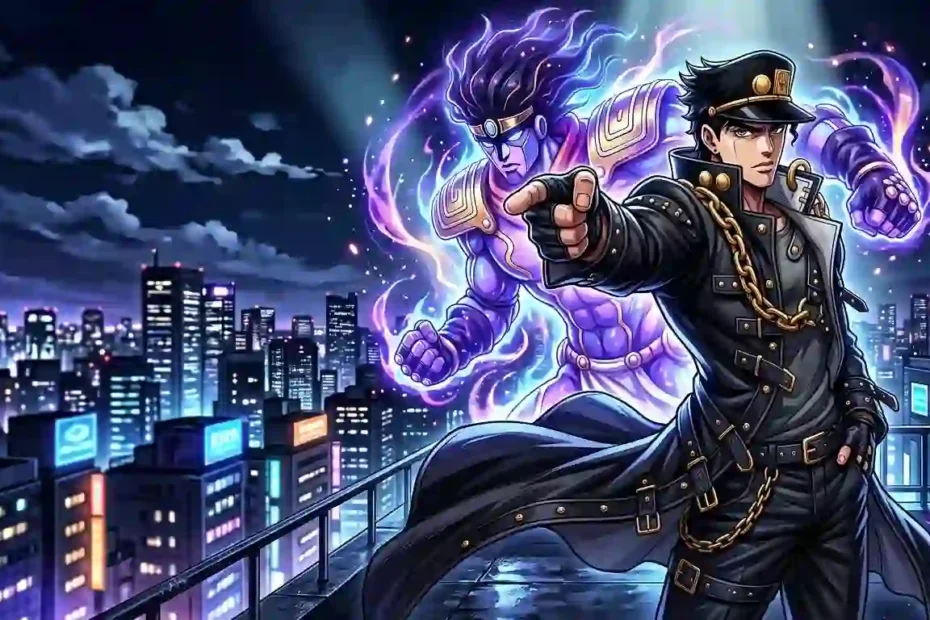
Have you ever seen that tall guy in a black cap and long coat pointing coolly at his enemy? Chances are, you’ve just met one of anime’s most famous faces.
He is more than just a character from JoJo’s Bizarre Adventure. The delinquent-turned-hero has become a symbol of quiet strength, iconic fashion, and unforgettable battles. Whether you’re brand new to JoJo or you’ve binged every episode, his story has something for you. In this guide, you’ll learn who he really is, how his powers work, why fans still talk about him decades later, and how you can appreciate his legacy beyond the screen.
Quick Overview Box
- Full Name Most Fans Know: The third JoJo from the Kujo family
- First Appearance: JoJo’s Bizarre Adventure: Stardust Crusaders in 1989
- Signature Stand: Star Platinum, known for insane precision and power
- Most Famous Traits: Stoic attitude, iconic cap and coat, love for marine life
- Key Story Arcs: From his debut journey to Egypt to his moving role in Stone Ocean
- Cultural Impact: His pose inspired fashion shoots, memes, and cosplay worldwide
Who Is Jotaro Joestar and Why Does He Matter So Much?
If you’re new to JoJo, the naming might confuse you. Every JoJo is a different protagonist whose name can be shortened to JoJo, and this stoic delinquent is the third in that bloodline. The grandson of Joseph Joestar and son of Holly Kujo, he carries the Joestar spirit but in a totally different package.
Unlike his outgoing and trickster grandfather, this hero is quiet to the point of seeming cold. He speaks in short, blunt sentences. He rarely smiles. Teachers think he’s rude, delinquents think he’s tough, and fans know he’s secretly deeply loyal. What makes him fascinating is the gap between his intimidating look and his tender core.
The Definition Behind the Name
JoJo: A nickname given to members of the Joestar family whose names can be abbreviated to JoJo. For this hero, it comes from Jo-taro Kujo. Each JoJo leads their own part of the series, but their legacies connect through family, fate, and the battle against evil.
His story starts not with a quest for glory, but with a crisis. He locks himself in a jail cell because he believes he’s possessed by an evil spirit. In reality, he’s manifesting his Stand for the first time. That fear and confusion makes him feel very human. Have you ever misjudged your own strength?
Early on, you learn two things about him. First, he adores his mother Holly, even if he never says it sweetly. Second, he has a deep respect for sea life and wants to become a marine biologist. These soft details keep you rooting for him even when his face says don’t bother me.
How His Personality Won Over Fans
The charm isn’t in big speeches. It’s in small actions. He risks his life without hesitation to save his mother from a curse. He protects strangers on the journey to Egypt even when it slows him down. He remembers his friends’ sacrifices years later.
Over time, you’ll notice his growth. The teen who punched his way out of problems becomes a father and later a mentor who carries the weight of the past. That slow transformation is why people keep coming back. He’s not perfect, but he’s dependable when it counts.
What Are Star Platinum’s Powers and How Do They Actually Work?
To understand this hero, you have to understand his Stand. In JoJo, a Stand is a physical manifestation of a person’s fighting spirit and life energy. Only Stand users can see other Stands, which leads to invisible battles happening right next to normal people.
Star Platinum is widely considered one of the most powerful close-range Stands ever shown. At first, it looks simple. It’s incredibly strong, insanely fast, and precise enough to catch a bullet between fingers or perform delicate surgery. Its signature cry of ORA ORA during a flurry of punches has become legendary in anime.
The Breakdown of Its Core Abilities
Think of Star Platinum in three layers. The first layer is raw physical power. It can shatter diamond-like teeth, lift heavy objects, and move faster than the eye can track. The second layer is precision. It can pluck tiny objects off a table, draw a photorealistic portrait in seconds, or adjust microscopic mechanisms.
The third layer is what changes everything. Later in his journey, he discovers that Star Platinum can stop time for a brief moment. At first it’s just half a second, then up to five seconds. In a fight where microseconds matter, five frozen seconds feels like an eternity. Doesn’t that shift how you see a one-on-one duel?
Star Platinum vs. The World: A Simple Comparison
To make this clearer, here’s how Star Platinum compares to its evil counterpart, The World, wielded by DIO:
| Feature | Star Platinum | The World |
|---|---|---|
| User | The stoic hero | DIO, the immortal vampire |
| Range | Close-range, needs to be near target | Close-range, similar limit |
| Strength & Speed | Top tier, precise punches | Top tier, equally devastating |
| Special Ability | Stops time for up to 5 seconds | Stops time for up to 9 seconds initially |
| Weakness | Time stop drains stamina quickly | Vulnerable if user is exposed |
This table shows why their final battle feels so balanced. It’s not just about who hits harder, but who uses those frozen seconds smarter.
Why Is Part 6 the Emotional Conclusion Fans Still Discuss?
For many fans, his appearance in the sixth part, Stone Ocean, hits harder than any punch. If you first met him as the invincible teen who never lost his cool, seeing him here will surprise you.
He’s no longer the main fighter. He’s a father. His daughter Jolyne Cujoh is in prison for a crime she didn’t commit, and he drops everything to help her. You see worry in his eyes that wasn’t there before. You see guilt because he wasn’t around much. Have you ever watched someone try to make up for lost time?
This part reframes everything. The man who once seemed emotionless now struggles to express love. He gives Jolyne a small pendant with a piece of his Stand’s power to protect her. He doesn’t give a long speech about how much she means to him. He just acts. And somehow that feels more real than any dramatic monologue.
What This Era Means for His Legacy
Without spoiling every twist, his role in this final chapter closes a loop that started in Stardust Crusaders. The curse that threatened his mother, the century-old rivalry with DIO, and the weight of the Joestar fate all converge here. You understand that his quiet toughness was never about looking cool. It was about enduring loss without passing the pain forward.
Fans often debate whether this was the right send-off. Some wanted him to stay invincible forever. Others appreciate that he was allowed to be vulnerable and human. Either way, no one forgets his moment here. It turns an icon into a person you genuinely care about.
For beginners, don’t start with this part. Watch his journey from the beginning to feel the full impact. When you reach this chapter, you’ll carry every battle, joke, and farewell with you, and that’s what makes it powerful.
How Did the Iconic Pointing Pose Become a Cultural Icon Beyond Anime?
You don’t need to watch a single episode to recognize the stance. One hand pointing forward, body slightly turned, chin low, cap casting a shadow. It’s confident without being loud. Fashion designers have referenced it, artists have recreated it, and friends joke about it at conventions.
So how did a single character pose travel so far? JoJo creator Hirohiko Araki is famous for pulling inspiration from high fashion magazines. He treats characters like models on a runway. Each stance tells you about their personality before they speak.
Why This Specific Stance Works
The pose does three things at once. First, it frames the silhouette. The long coat, the chain, the cap create strong lines that look great even as a shadow. Second, it communicates attitude. The pointing finger isn’t friendly, it’s a challenge that says you’re next. Third, it’s surprisingly easy to copy.
That’s the secret. Unlike complex martial arts forms, most people can try it with friends and get a laugh. It’s accessible. Have you tried standing like him in a mirror? You’ll feel a little more confident instantly.
Cosplayers love it because it photographs well from almost any angle. Meme makers love it because you can swap context and keep the cool factor. Even people who’ve never heard of JoJo have seen the parody versions in sports celebrations or music videos. The image carries the reputation for him.
If you want to understand JoJo’s influence on pop culture, start here. This single image explains how anime style can shape real-world trends without saying a word.
How Does He Compare to Other JoJos: What Really Sets Him Apart?
Every JoJo is meant to be different. Jonathan Joestar was a gentleman. Joseph Joestar was a clever prankster. Josuke is kindhearted, Giorno is ambitious, and Johnny is reflective. So where does our stoic captain fit?
He’s the anchor. While others talk, scheme, or dream out loud, he observes and acts. That makes him the perfect straight man for JoJo’s famously bizarre world. When a villain gives a ten-minute speech about destiny, he might just say good grief and throw a punch.
A Quick Comparison for New Viewers
Here’s a simple way to see the differences:
- Jonathan: Leads with heart and manners, fights like a classic hero
- Joseph: Leads with tricks and witty traps, always two steps ahead with words
- Our Hero: Leads with calm pressure, lets results speak
- Josuke: Leads with compassion, heals others even mid-battle
- Giorno and Beyond: Lead with big dreams about changing systems
You’ll notice his fights rely less on complicated plans and more on decisive timing. That doesn’t mean he’s less smart. It means he trusts his instincts and his ability to execute under pressure. In group scenes, he often becomes the quiet judge others look to for approval.
This contrast is why group dynamics in Stardust Crusaders work so well. You have the loud, flamboyant Polnareff, the wise old Joseph, the gentle Kakyoin, and him in the middle holding the line. Without that center, the team would feel unbalanced.
For professionals analyzing character design, he’s a great case study in less is more. You don’t need constant dialogue to show leadership. You just need consistency and follow-through.
How to Master the Iconic Pose Step by Step
Want to nail the look for a photo, cosplay, or just fun? The good news is you don’t need special training. You just need to pay attention to angles.
The Classic Version in 5 Steps
- Set Your Base: Stand with your feet shoulder-width apart, one foot slightly forward. Keep your weight balanced, not leaning.
- Angle Your Body: Turn your torso about 45 degrees away from the camera, but turn your head back toward the lens. This creates that dynamic fashion-line S-shape.
- Place Your Arms: Extend your dominant arm forward with your index finger pointing directly at the viewer. Keep the elbow slightly bent, not locked.
- Tilt Your Head Down: Lower your chin just enough that your cap brim or eyebrows shadow your eyes a little. The mysterious gaze is key.
- Hold the Attitude: Relax your off-hand by your side or on your hip. Keep your mouth neutral, breathing slow. Think calm, not angry.
Pro tip: The coat helps, but any long jacket works. Add a chain or dark cap if you have it. Lighting from slightly above will cast the right shadow across your face.
Common Mistakes and Easy Fixes
Many beginners point too high, which looks more like a teacher calling on someone. Aim at chest level of your imaginary opponent. Others stiffen their whole body. Remember to keep your shoulders down. The coolness comes from being relaxed under pressure.
If you’re shooting with friends, try a group version where everyone points at the same object. That recreates the team arrival scenes that fans love. And if you’re short on space, a half-body crop still works because the hand and head angle carry most of the expression.
You don’t need to be tall, muscular, or Japanese to pull it off. The pose is about posture and intent. Wouldn’t it be fun to surprise your friends with it at the next hangout?
What Can Writers Learn About Naming Characters?
If you write fiction, games, or comics, character names do heavy lifting. They tell readers about origin, personality, and even destiny. And here you can learn a surprising lesson.
The series is famous for music references. Many characters are named after Western bands, songs, and fashion designers. This gives each name instant mood and memory. When you hear a name linked to a song you know, you already feel something. It’s clever branding baked into storytelling.
The Fantasy Naming Connection for Writers
So what do tiefling names have to do with all this? At first glance, nothing. Tieflings are a popular player race in fantasy tabletop games, known for infernal heritage, striking horns, and names that often sound exotic or virtuous.
But the creative principle overlaps perfectly. Great fantasy names often combine sound, meaning, and cultural hint. A name like Ember Sinborne or Valor Nightwhisper instantly suggests a backstory. Similarly, JoJo character names fuse real-world music culture with personality.
For writers juggling multiple cultures, here’s a practical takeaway:
- Fantasy names with infernal flavor often use sharp consonants or demonic flourishes to signal otherness
- JoJo names use American and British rock references to signal coolness and modern myth
- Both systems borrow from existing cultural libraries so readers do half the imagination work for you
If you’re naming your own tiefling character, try this JoJo-inspired method. Pick a band or song that matches the character’s vibe, then tweak it until it fits your world. You’ll get options that feel familiar yet fresh.
The key lesson is consistency. Araki doesn’t name one character after a song and the next randomly. He builds a whole naming universe. If you choose a shared language pattern for your fantasy cast, readers will sense the cohesion even if they can’t explain why.
How to Apply This Without Copying
Don’t just copy names. Adapt the system. Decide on your source inspiration, whether that’s jazz albums, classical composers, or street names from your city. Then create rules for how you alter them to fit your setting.
This approach keeps you original while honoring what works. Your audience gets an inside joke to discover, and your world feels intentional.
Where Should New Fans Start Watching or Reading?
With so many JoJos, it’s normal to feel lost. Should you start at part one or jump to the famous part three? The answer depends on your style.
If you love complete stories and don’t mind older animation, start chronologically with Phantom Blood. You’ll understand the Joestar family curse, the importance of DIO, and why each generation inherits both power and burden. It makes every later sacrifice matter more.
A Beginner-Friendly Path
If you want to meet our hero quickly, most fans recommend starting with Stardust Crusaders. It was designed as an entry point with a clear road-trip structure. A small team travels to defeat evil, each stop introduces a new ally or enemy, and you get plenty of time with the main cast.
Here’s a simple viewing order that respects story continuity:
- Start with Phantom Blood and Battle Tendency to learn the Joestar legacy
- Move to Stardust Crusaders to meet the team and Star Platinum
- Continue to Diamond Is Unbreakable and Vento Aureo for tonal variety
- Finish with Stone Ocean to close his personal arc
For readers, the manga offers Araki’s original art, which grows more stylish over time. The anime adds color, voice acting, and that legendary soundtrack. Neither is wrong. Which format do you enjoy more, watching battles animate or lingering over detailed art?
If you’re short on time, even watching a curated set of his best fights will give you his essence. Just make sure you also catch quiet scenes with his friends and family. That’s where you see why people care beyond the punches.
Key Takeaways Box
- The stoic hero is famous for quiet loyalty, not just power
- Star Platinum combines brute strength, surgical precision, and brief time-stop ability
- His most emotional growth happens as a father in his later story
- The signature pose endures because it’s stylish, simple, and instantly recognizable
- Comparing him to other JoJos highlights his role as the calm anchor of the series
- Writers can borrow his naming logic to craft better fantasy names, including tiefling-style characters
Frequently Asked Questions
Who is Jotaro Joestar in JoJo’s Bizarre Adventure?
He is the protagonist of Part 3, Stardust Crusaders, and a recurring figure later. A high-school student with a powerful Stand called Star Platinum, he’s known for his stoic nature, iconic coat and cap, and journey to save his mother and later his daughter.
What is the jotaro pose and why is it so famous?
It’s his signature pointing stance with a slight body turn and low chin, inspired by fashion modeling. It’s famous because it’s visually striking, easy to recreate for cosplay and photos, and has been parodied widely in memes and pop culture.
What are his main powers besides punching hard?
Beyond raw strength and speed, Star Platinum offers incredible precision for delicate tasks and the ability to stop time for a few seconds. This short time-stop allows him to dodge attacks, reposition, and land decisive blows.
Is jotaro kujo part 6 his final appearance?
In the original continuity, Stone Ocean marks his final major appearance and emotional farewell. It focuses on his daughter Jolyne Cujoh and gives closure to his lineage, so it’s best experienced after earlier parts.
Why do people compare fantasy naming to JoJo character names?
Both use real-world cultural libraries to build identity. One borrows infernal or virtuous sounds for fantasy flavor, while JoJo names borrow music references for modern style. Both systems show how consistent rules strengthen worldbuilding.
Do I need to watch all JoJo parts to enjoy his story?
No, you can start with Stardust Crusaders and follow him, but watching earlier parts adds context to his family history. For the full emotional payoff of his later role, seeing his growth across parts helps a lot.
Conclusion
In the end, what keeps people talking about this character isn’t just how hard he can punch. It’s how little he says while doing so much for others. He shows you that quiet people can be deeply caring, that style can be storytelling, and that legacy isn’t about being the strongest forever but about being there when your family needs you.
If you’ve never watched his journey, give it a try. If you already love him, revisit those quiet moments between battles. You might notice something new. Which version of him speaks to you most — the cool teen, the reliable ally, or the devoted father?