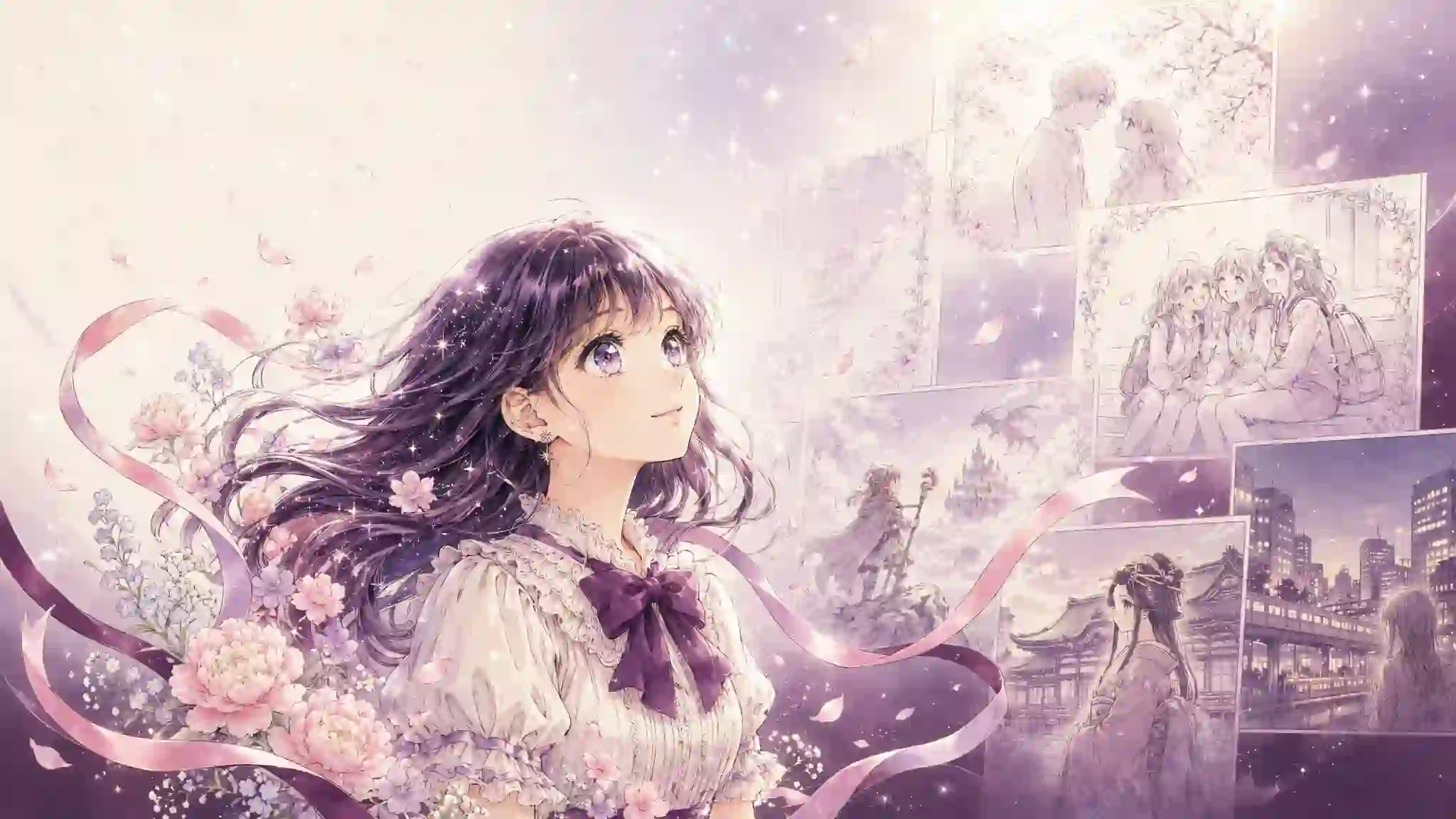
If you searched for the king of shojo, you may expect one creator or manga to top a definitive list. Shōjo does not have an official monarch, though. It is a broad publishing category shaped by generations of artists, editors, readers, and changing ideas about love, friendship, identity, and courage. This guide explains what shōjo means, why the label matters, which creators helped shape it, and how to choose a great series. You will leave with a clearer answer—and a practical reading path.
Is there an official king of shojo?
No single person or title holds an official crown. “King of shojo” is an informal phrase readers may use for a favorite artist, a commercially successful manga, or a creator with lasting influence. The answer changes depending on what a reader values: historical impact, storytelling craft, popularity, artistic innovation, or personal connection.
The phrase can also be a search term associated with a particular website, title, or fan community. Search terms are not proof of an official award or recognized industry title. If you mean a specific series named King of Shojo, confirm its exact spelling, creator, publisher, and official listing before treating it as the subject of an article.
A fair answer starts by explaining the category. Shōjo manga is manga marketed primarily to girls and young women, but readers of every gender enjoy it. It includes romance, comedy, fantasy, action, mystery, slice of life, and stories that resist neat labels. Shōjo is a publishing demographic, not a promise that every story will be a romance.
What does shōjo mean in manga?
The Japanese word shōjo broadly refers to a girl or young woman. In manga publishing, it describes a category historically associated with magazines and imprints aimed at a young female readership. The category helps readers, retailers, and publishers organize work, but it does not define every reader or limit who can enjoy a story.
Shōjo manga is not a single visual style. One series may use delicate linework, expressive eyes, and ornate backgrounds; another may favor clean comedy, dynamic action, or restrained realism. A title’s publisher and magazine context can help classify it, while its story may cross into genres such as fantasy, sports, science fiction, or suspense.
When people ask who is the king of shojo, they often blend together three separate questions: who is most famous, who had the greatest influence, and which manga should a new reader start with. Separating those questions makes the answer more useful and avoids presenting personal taste as a universal fact.
How shōjo manga developed
Shōjo manga grew through changing magazines, audiences, and creative traditions. Its history is not a straight line toward one defining series. Artists expanded what the category could contain, from intimate school stories to epic fantasy and emotionally complex dramas. Editors and readers also influenced which subjects publishers supported and how stories reached new audiences.
In the postwar decades, women artists increasingly shaped manga for girls. The so-called Year 24 Group—a loose label for influential women manga artists born around the 24th year of the Shōwa era, or 1949—helped broaden approaches to character, time, genre, and visual storytelling. The label includes distinct artists, not a formal team with a single style.
Later decades brought new readerships, adaptations, international licensing, and online discovery. Readers now encounter classic series alongside current releases and independent recommendations. That variety makes a single winner less meaningful: the category is a living conversation, not a contest with one final champion.
What makes a shōjo story distinctive?
There is no required checklist. Still, many shōjo stories give close attention to a character’s inner life and relationships. A misunderstanding may matter because it changes trust. A confession can mark a shift in self-understanding, not just a romantic milestone. Friendship, rivalry, family, work, and belonging can carry as much weight as a love plot.
Visual storytelling also plays a central role. Artists may use panel rhythm, facial expression, symbolic imagery, changes in background, or shifts in page composition to show what a character cannot say aloud. Those choices vary widely, and readers should not mistake one familiar visual convention for the whole category.
Common elements include:
- Character growth shaped by emotional choices
- Relationships that change over time
- Strong points of view and expressive reactions
- Romance, friendship, family, or community as central themes
- Flexible genre conventions, from comedy to supernatural drama
- Art that uses pacing and composition to support mood
These are tendencies, not rules. A shōjo manga can be quiet or explosive, humorous or serious, realistic or fantastical. The label tells you something about its publishing tradition; it does not tell you everything about its content.
Influential creators readers often discuss
There is no objective ranking that can settle the king of shojo question for every reader. It is more helpful to talk about creators whose work is often discussed for its influence, range, or enduring readership. The following names offer entry points, not a definitive top-ten list.
Moto Hagio
Moto Hagio is widely recognized as a major manga artist associated with the Year 24 Group. Her work helped expand the possibilities of character-focused manga and speculative storytelling. Readers interested in older works that take emotional complexity and unusual settings seriously may find her a rewarding starting point.
Riyoko Ikeda
Riyoko Ikeda created The Rose of Versailles, a landmark historical drama set around the French Revolution. Its political setting, theatrical scale, and memorable characters show how a manga associated with shōjo readership can reach far beyond a school or romance plot.
Keiko Takemiya
Keiko Takemiya is another influential artist associated with the Year 24 Group. Her career demonstrates the breadth of shōjo-related manga, including stories that experiment with genre, setting, and character relationships. Readers exploring manga history can compare her work with that of her contemporaries rather than treating them as interchangeable.
Naoko Takeuchi
Naoko Takeuchi is the creator of Sailor Moon, a globally recognized series that combines magical-girl action, friendship, romance, and comedy. Its lasting visibility makes it an obvious title in discussions of influential manga for girls, but popularity alone does not make it the sole representative of shōjo.
Other artists and newer voices
Many other creators have built devoted audiences and shaped particular subgenres. Contemporary readers can find school comedy, historical romance, fantasy, workplace stories, LGBTQ+ narratives, and experimental works across manga imprints. Rather than asking one name to represent everyone, look for creators whose themes and storytelling match your interests.
Essential shōjo manga to explore
A useful reading list should show range, not claim that every reader must like the same classics. Check the publisher’s description and content notes before starting, especially for older works whose social attitudes or depictions may feel different from those in current releases. Availability and edition details vary by country.
| Manga | Creator | Why readers may explore it | A good fit for |
|---|---|---|---|
| The Rose of Versailles | Riyoko Ikeda | Historical drama, political conflict, and an expansive cast | Readers who enjoy history and high-stakes character drama |
| Sailor Moon | Naoko Takeuchi | Magical-girl action woven with friendship and romance | Readers seeking a lively, accessible classic |
| The Heart of Thomas | Moto Hagio | Emotionally intense character drama in a school setting | Readers interested in manga history and introspective stories |
| They Were Eleven | Moto Hagio | Science-fiction mystery built around a group under pressure | Readers who want suspense and speculative fiction |
| Kaze to Ki no Uta | Keiko Takemiya | A historically discussed work with challenging themes | Readers prepared to review content details first |
| Glass Mask | Suzue Miuchi | Long-running drama centered on acting and ambition | Readers drawn to performance, rivalry, and perseverance |
| Fruits Basket | Natsuki Takaya | Family bonds, romance, comedy, and supernatural elements | Readers who want an emotional ensemble story |
| Nana | Ai Yazawa | Friendship, ambition, music, and adult relationships | Readers looking for contemporary-feeling character drama |
This list crosses eras and tones. A reader seeking gentle comedy may not want a tragic historical epic; someone looking for elaborate world-building may prefer fantasy over realistic school life. Use the descriptions as a map, not a scorecard.
A chapter-by-chapter guide: how to read a series responsibly
There is no universal chapter table for all shōjo manga. Each series has its own structure, release schedule, editions, and chapter numbering. Some titles use volumes and chapters; others use installments, bonus chapters, or differently numbered digital editions. A responsible guide should not invent chapter summaries or pretend that a chapter count is consistent across every platform.
For a series-specific chapter guide, first verify the official table of contents and publisher’s edition. Then record the chapter number, official title if available, volume, release date where confirmed, and a short original summary. Avoid reproducing long passages, scanlations, or unofficial translations. Mark spoilers clearly and distinguish an interpretation from a confirmed plot event.
| Chapter-guide field | What to record | Why it matters |
|---|---|---|
| Chapter number | Number shown in the official edition | Digital and print numbering may differ |
| Official chapter title | Exact title, if the edition provides one | Prevents invented or mismatched labels |
| Volume or installment | Volume number or platform release | Helps readers locate the chapter |
| Summary | A short, original description | Gives context without copying the manga |
| Character focus | Main characters involved | Helps readers follow an ensemble cast |
| Spoiler level | None, mild, or major spoilers | Lets readers choose how much to learn |
| Verification note | Publisher or licensed edition checked | Makes the guide accountable |
What about “Mysterious Village ch 88”?
The phrase “Mysterious Village ch 88” does not identify a series with enough certainty to summarize it safely. Different works may use similar translated titles, and unofficial sites may change names or numbering. Without an exact original title, author, publisher, or official chapter listing, any detailed account of chapter 88 would risk misleading readers.
To build an accurate chapter entry, verify the exact title and edition first. Then confirm chapter 88 against the publisher or licensed platform, note any edition differences, and write a concise summary in your own words. If you share those details, an accurate chapter table can be prepared without guessing.
Shōjo, josei, shōnen, and seinen: what is the difference?
These labels are publishing demographics, not strict genre boxes. Shōjo and josei have traditionally targeted girls and women, while shōnen and seinen have traditionally targeted boys and men. Their audiences overlap, and their stories can share genres, themes, and visual approaches.
A romance is not automatically shōjo, and an action story is not automatically shōnen. Publication context can matter more than a reader’s assumptions about the story’s subject. Publishers also vary in how they position a title across regions and editions. When it comes to classification, use the publisher’s own catalog instead of making assumptions based solely on the cover.
The best way to choose is to focus on what you want to read: a close emotional perspective, an intricate mystery, a funny school ensemble, a sweeping fantasy, or an adult relationship drama. These preferences are more useful than trying to sort every title into a rigid box.
How to choose your first shōjo manga
Start with a mood or theme, not a popularity ranking. If you want romance, decide whether you prefer light comedy, slow-burn tension, or a more serious relationship story. If you want adventure, look for fantasy or magical-girl stories. If you enjoy character studies, explore drama and slice-of-life titles.
Use this simple selection process:
- Pick a tone. Decide whether you want something funny, tender, suspenseful, dramatic, or adventurous.
- Choose a setting. Try a typical neighborhood, a job, a fantasy realm, a school, or historical Europe.
- Read the official synopsis. Check the publisher’s description and content notes.
- Sample a legal preview. Many publishers offer preview pages or sample chapters.
- Check format and access. Confirm the available language, edition, and reading platform in your region.
- Give it a fair try. If the first title is not for you, that says nothing about the whole category.
The king of shojo may be a fun way to ask for a top recommendation, but a personal shortlist is more practical. Build one around your tastes, then try a classic and a newer series to see how storytelling approaches have changed.
How to judge influence without confusing it with popularity
Popularity is visible through sales, adaptations, social conversation, or a title’s presence in bookstores. Influence is harder to measure. A work may change how later artists handle a genre, inspire new kinds of characters, or open space for stories publishers had rarely backed. Although the two concepts are not the same, a financially successful title can also have an impact.
When weighing claims about the king of shojo, ask what evidence supports the claim. Is it a personal favorite? A sales record for a particular country and period? A critical assessment of historical influence? A poll with a defined audience? These measures answer different questions. A useful article names the measure instead of presenting a subjective label as a fact.
Readers can also assess a title by its craft. Consider whether its characters make meaningful choices, whether the art supports the mood, whether the pacing fits the story, and whether the work has something distinctive to say. This is a stronger foundation for a recommendation than a ranking without context.
Reading older works with context
Classic manga can be rewarding, but readers should approach older material with curiosity and care. Social norms, language, translation choices, and publishing conventions change over time. A story may contain ideas or depictions that modern readers find uncomfortable. That does not require either dismissing the whole work or excusing every element.
A thoughtful reading guide can explain the historical setting, flag sensitive material, and distinguish the work’s influence from its limitations. Keep the description specific and fair. Rather than using a vague label such as “problematic” without explanation, identify what readers may encounter and why the context matters.
Translations also shape how readers experience a series. Names, honorifics, jokes, and cultural references may be handled differently across editions. If two readers disagree about a line or plot detail, check which translation or release they are discussing before assuming one account is wrong.
Where to find shōjo manga legally
Look for licensed print or digital editions from the publisher, an authorized bookseller, or a recognized library service. The rights holder and your locality determine availability. An official publisher catalog is a reliable place to confirm a title’s current edition, creator credits, and format.
Manga creators and publishers are supported by legal editions. They also reduce confusion caused by altered titles, missing pages, inconsistent chapter numbering, or unofficial translations. If a title is unavailable in your region, check libraries and publisher announcements rather than relying on sites that do not identify a rights holder.
For chapter-specific articles, clearly state which edition you used. A printed volume, a magazine serialization, and a digital release may not divide the story in exactly the same way. That simple note prevents readers from searching for a chapter number that does not match their copy.
How to write a trustworthy shōjo guide
A useful guide answers the reader’s question and shows how its claims were checked. It should be evident whether a remark is a recommendation, an editorial opinion, or a verified fact. Naming the author and explaining their relevant experience helps readers understand the perspective behind the article.
Before publishing, verify creator names, title spellings, publisher details, dates, and chapter numbers. Prefer primary materials such as publisher catalogs, official creator pages, licensed editions, and publisher announcements. If a detail cannot be confirmed, leave it out or label the uncertainty precisely. Never fill a missing chapter summary with a guess.
A practical quality check includes:
- State the intended audience and scope.
- Define subjective phrases such as “best” or “king.”
- Explain the criteria behind recommendations.
- Identify the edition used for chapter details.
- Separate fact from opinion.
- Update availability and release information when it changes.
- Correct errors visibly and promptly.
These habits build trust more effectively than promising a perfect ranking or guaranteed search performance. Search visibility cannot be guaranteed; the reader’s experience and the accuracy of the page should come first.
Frequently asked questions
Who is the king of shojo manga?
There is no official king of shōjo manga. Readers may use the phrase for an influential creator, a beloved series, or a personal favorite, so the answer depends on the criteria.
Is “king of shojo” a real award or industry title?
Not as a universally recognized official title. Treat it as an informal phrase unless a specific award, publisher, or organization defines it and names a recipient.
What is the most famous shōjo manga?
Fame depends on country, time period, and the measure used. Sailor Moon and The Rose of Versailles are widely recognized examples, but no single title represents the entire category.
Is shōjo only romance?
No. Shōjo manga includes romance, fantasy, comedy, action, historical drama, mystery, science fiction, and slice-of-life stories. The label is broader than one genre.
Is Mysterious Village chapter 88 part of “King of Shojo”?
This guide cannot confirm that connection from the phrase alone. Verify the exact series title, creator, publisher, and official edition before linking a chapter to it or publishing a plot summary.
Where should a new reader start?
Choose a title by tone and theme. Try an official preview, check content notes, and start with a story that matches your interests rather than a ranking that claims one manga is best for everyone.
The answer is a reading journey, not a crown
There is no single king of shojo who can stand for every era, creator, or reader. The category’s strength comes from its range: intimate character drama sits beside political history, supernatural adventure, comedy, and romance. A more useful question is which creator or series speaks to you—and what makes its storytelling work.
Start with one title that fits your mood, then explore beyond it. Compare an influential classic with a newer release, share a thoughtful recommendation, and support the creators through licensed editions. If you are building a chapter guide, verify every number against the edition readers can actually find. That care turns a search result into a resource people can trust and return to.