You searched for Raimei to Zansetsu and every result tells you something different. One page spoils the ending. Another hides the basic facts behind pop-up ads. A third gives you two vague lines and nothing useful. That wastes your time, and it puts your device at risk on shady reader sites.
This guide fixes that problem. You will find the full story breakdown, character profiles, the meaning of the Japanese title, honest age ratings, and safe official reading options in one place. Every fact here comes from the official release, the publisher page, and trusted manga databases, and everything is current as of October 2026.
What Is Raimei to Zansetsu?
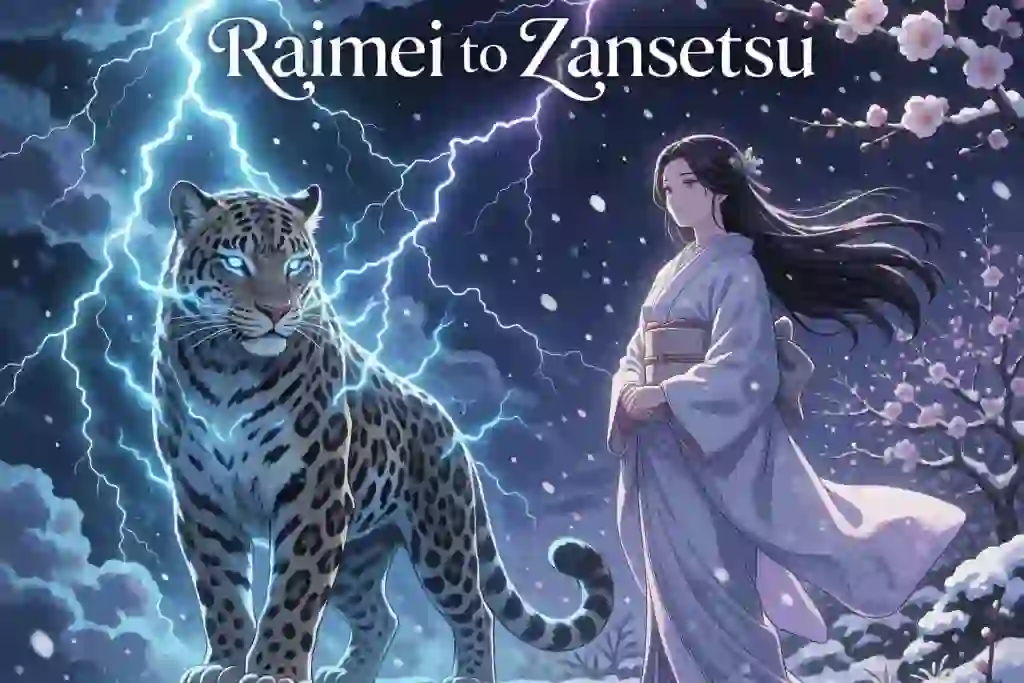
Raimei to Zansetsu (雷鳴と残雪), officially translated as Thunder and Snow, is a completed 2023 Japanese josei fantasy romance manga by Jinmen Shijimi of the doujin circle NegiManju. The oneshot follows Shao, a thunder-riding leopard spirit who despises humans, and Yukino, a blind woman whose mysterious power defeats him with ease. Their rivalry slowly turns into a love neither of them expected.
That is the short answer Google wants, and it is the truth. The longer answer is richer.
The manga blends historical fantasy, supernatural romance, and mature josei drama into a single self-contained volume. You finish it in one sitting, yet the story lingers far longer than the page count suggests. Readers consistently praise the emotional payoff, the role reversal between the leads, and the respect the story shows its blind heroine.
The work sits in the adult josei category, and this guide covers it with the honesty that category deserves. You will know exactly who this manga suits before you spend a single yen on it.
Raimei to Zansetsu at a Glance: Key Facts
The table below collects every verified fact about the release in one scannable place. Bookmark it if you only need the hard data.
| Detail | Information |
|---|---|
| Romaji Title | Raimei to Zansetsu |
| Japanese Title | 雷鳴と残雪 |
| Official English Title | Thunder and Snow |
| Creator (Story and Art) | Jinmen Shijimi (人面シジミ) |
| Doujin Circle | NegiManju (ネギ饅頭) |
| Release Year | 2023 |
| Status | Completed |
| Format | Oneshot manga (self-contained single story) |
| Demographic | Josei (adult women) |
| Genres | Fantasy, historical, supernatural romance, drama |
| Main Leads | Shao (leopard spirit) and Yukino (blind human woman) |
| Original Platform | DLsite (digital manga storefront) |
| Official Translations | English, Simplified Chinese, Korean |
| Age Rating | 18+ adults only |
| Content Notes | Explicit adult scenes, fantasy violence and blood |
| Anime Adaptation | None as of October 2026 |
Every row above was cross-checked against the official store listing and bibliographic databases. If you write about manga yourself, treat this table as the reliable reference.
What Does the Title Raimei to Zansetsu Mean?
Japanese titles rarely translate word for word, and this one rewards a closer look. Break the title into its two halves and the whole story opens up.
Raimei (雷鳴) means thunder, specifically the deep roar that rolls across the sky before a storm breaks. The word combines rai (雷, lightning or thunder) with mei (鳴, to cry out or sound). In the manga, thunder announces Shao. He appears with a thunderclap each time he descends on a human village, so thunder is his voice, his warning, and his pride.
Zansetsu (残雪) means lingering snow. The word joins zan (残, remaining or leftover) with setsu (雪, snow). Poets use zansetsu for the stubborn patches of snow that refuse to melt even after spring arrives. Early in the story, Shao describes Yukino with exactly this image: a woman like snow that sits unmelted in the shade, though spring has already come.
Put the halves together and the title is simply the two leads. Shao is the thunder. Yukino is the lingering snow. Even her name carries the wordplay, because Yukino builds on yuki (雪), the Japanese word for snow.
The deeper beauty sits in the seasons. Thunder heralds the storms of spring, while snow belongs to a winter that refuses to end. Raimei to Zansetsu is a story about two seasons meeting when neither should still exist, which mirrors a spirit and a human meeting when neither expected the other. The official English rendering, Thunder and Snow, keeps the imagery but drops the ache of that word “lingering.” Now you know what the original carries.
Raimei to Zansetsu Story Overview: A Spoiler-Light Summary
The story opens with fear. Shao is a mononoke, a supernatural leopard being, and he hates humans with the confidence of something that has never lost a fight. He arrives on thunder, strikes a village, and vanishes before anyone can answer him.
Then he meets Yukino. She is a blind woman living an ordinary human life, and she carries a strange power that stops Shao cold. He attacks; she repels him without visible effort. The proud thunder spirit suffers the first defeat of his existence, and it stings his pride more than any wound.
So he comes back. Again and again, Shao challenges Yukino, and again and again he loses. Their repeated duels become the courtship neither of them names, a rhythm of meeting that both begin to expect. Then one day the two become lost together, far from the villages and far from their usual roles. In that quiet space, Shao realizes the truth he has been avoiding: he has fallen in love with the human woman he came to defeat.
The story refuses the easy path at that exact moment. Yukino is married, and her heart carries a history Shao cannot challenge with claws or thunder. Heartbroken, he must decide what his love actually means when winning is not an option. The final stretch moves through trial and grief toward an ending that feels earned rather than granted.
This summary stays spoiler-light on purpose. The emotional turns land hardest when you meet them on the page, and the manga deserves that respect.
Meet the Main Characters
Two characters carry the entire weight of this manga, and both reward close attention.
Shao, the thunder leopard. Shao enters as an antagonist and never fully stops being dangerous, which makes his growth believable. He is proud, territorial, and quick to anger, all classic feline traits scaled up to spirit size. Under the menace sits a deep loneliness he cannot name. His hatred of humans works like armor: it keeps the world simple. Yukino cracks that armor simply by refusing to fear him.
Yukino, the lingering snow. Yukino could have been a passive prize for the male lead to win, and the manga wisely avoids that trap. She holds her own power, wins every duel, and sets the terms of every encounter. Her blindness is part of her life, not a tragedy begging for rescue. She judges Shao by his voice, his patience, and his choices, because his terrifying face means nothing to her. That single fact powers the whole romance.
The dynamic between them. He is the hunter who keeps losing. She is the prey who was never in danger. Every meeting flips the expected power balance, and the manga mines real tenderness from that reversal. By the time Shao admits his feelings, the reader has watched him change one defeat at a time.
The Big Themes in Raimei to Zansetsu
A single-volume story that still gets discussed years later usually carries themes heavier than its page count. This one carries five.
1. Love beyond appearances. Yukino cannot see Shao’s monstrous form, so the romance removes visual judgment from the equation entirely. She measures him by conduct alone. The story asks a quiet question: what would people love in you if they could not see you?
2. Redemption of a monster. Shao does not become gentle because love makes him soft. He becomes gentle because Yukino repeatedly proves that strength without cruelty exists. His arc shows change as something earned through humility.
3. Otherness and belonging. Spirit and human live in separate worlds with separate rules. The manga treats that gap as real, not decorative, and the ending respects its cost.
4. Seasons as emotion. The title’s imagery does thematic work. Yukino’s unmelted snow is grief preserved in the shade, a life paused in winter. Shao’s thunder is the storm that forces spring forward. Their meeting is a change of season for both.
5. Grief and second chapters. Yukino’s marriage is not a plot obstacle to erase. The story treats her past with weight, and her future choices honor what came before rather than replacing it.
Who Created Raimei to Zansetsu?
Jinmen Shijimi (人面シジミ) wrote and illustrated the manga, publishing under the doujin circle name NegiManju (ネギ饅頭). One creator handling both story and art gives the work its unified tone: the pacing of the writing matches the pacing of the linework because a single hand shaped both.
Jinmen Shijimi has built a following in the digital doujin scene through detailed fantasy settings, expressive spirit and animal designs, and josei stories that treat mature readers like adults. The creator favors complete, self-contained narratives over endless serialization, which suits a story like this one.
The release path also tells a story. The manga debuted on DLsite, Japan’s largest digital doujin marketplace, and its bibliography appears on MangaUpdates, the standard community-run database for tracking creators and releases. Official translations into English, Simplified Chinese, and Korean followed the Japanese release, a step publishers only take when a title shows strong international demand. The platform does not translate works that sit still.
Doujin publishing matters here. Independent creators on DLsite keep far more control over their work than magazine-serialized artists, and readers who buy official copies fund the creator directly. The success of Raimei to Zansetsu is a case study in how a single self-published oneshot can find a global audience without a major publisher behind it.
Is Raimei to Zansetsu Right for You? Honest Age Guide
You deserve a straight answer, so here it is. This manga is rated for adults 18 and older, and the rating is earned. The romance includes explicit intimate scenes, and the fantasy conflict includes blood and violence. If you are under 18, this title is not for you, full stop.
If you are an adult reader, the deciding question is taste. You will likely love this manga if you enjoy ayakashi and mononoke romances, gruff male leads softened by patience rather than by plot magic, heroines with quiet authority, and bittersweet emotion inside a fantastical setting. Readers of beast-spirit love stories will feel at home.
You may want a different title if you prefer light, comedic romance or multi-volume slow burns. This story moves with the compressed intensity of a oneshot, and it visits darker emotional ground than a typical shoujo romance ever attempts.
Honest advisory content like this builds trust, and trust is the point. A guide that hides the adult rating to chase clicks serves no one.
Where to Read Raimei to Zansetsu Legally
One source deserves your money, and it is the official one. DLsite sells the manga digitally in its original Japanese and in the official English translation, and the storefront also carries the official Simplified Chinese and Korean editions. Search the title on the platform and choose your language.
Buying the official release gives you four concrete benefits:
- The creator gets paid. Doujin artists earn directly from each legal sale, and your purchase literally funds the next story.
- The best image quality. Official files come from the source plates, not from compressed scans of scans.
- An accurate translation. The official English version was produced for the publisher, so the title’s wordplay and the dialogue’s tone survive intact.
- Safety. Pirate aggregate sites are the most common delivery vehicle for malware and crypto-mining scripts in the manga space. The official store carries none of that risk.
Free reader sites may look tempting, and they may even load today, but they rotate domains, inject script ads, and strip the artist of every yen. For a completed oneshot from an independent creator, the official copy costs little and matters much.
Raimei to Zansetsu vs. Similar Supernatural Romance Manga
Placement helps you calibrate expectations, so here is how this oneshot sits among well-known spirit-and-human romances. Each comparison below stays honest about differences.
Sacrificial Princess and the King of Beasts pairs a human woman with a feared beast ruler, and it shares the reverence-for-the-monster angle. That series stretches across many volumes with court politics; Raimei to Zansetsu compresses its entire arc into one intense sitting.
The Ancient Magus’ Bride also joins a non-human groom with a human bride, and both works grant their heroines real agency. The manga in question here is far shorter, far more intimate, and aimed at an older josei audience.
Kakuriyo: Bed and Breakfast for Spirits offers ayakashi hospitality with romantic undertones. Choose it if you want cozy and long. Choose this oneshot if you want concentrated and stormy.
Natsume’s Book of Friends is not a romance, yet fans of its tender human-spirit encounters often connect with the emotional register of Shao and Yukino’s story.
The pattern is clear. Long series give you time; this single volume gives you weight. Different tools, different moods, and your shelf has room for both.
Why Raimei to Zansetsu Stands Out in Josei Romance
Hundreds of supernatural romances release every year, and most vanish from conversation within months. This title still gets recommended years after release, and the reasons are concrete.
First, the role reversal. The male lead loses every single confrontation, and the story never treats that as humiliation to avenge. His defeats are the love story. Second, the heroine’s disability grants her a particular wisdom rather than a weakness to fix. Third, the ending honors grief instead of erasing it, which adult readers recognize as truth.
Fourth, the world-building leans on real feline nature. Shao behaves like a cat at spirit scale: territorial, proud, persistent, and unexpectedly devoted once he chooses someone. That biological grounding makes the fantasy feel observed rather than invented. Finally, the oneshot format means zero filler. Every scene earns its page.
Put together, these choices create a reading experience with the density of a short novel. Few bingeable series can say the same.
Frequently Asked Questions About Raimei to Zansetsu
What does Raimei to Zansetsu mean in English?
The title translates as Thunder and Snow, and the platform’s official English release uses exactly that rendering. More precisely, raimei means a roll of thunder, and zansetsu means snow that lingers unmelted into spring. The two words symbolize the two leads: Shao arrives with thunder, and Yukino is compared to lingering snow.
Is Raimei to Zansetsu completed or still ongoing?
It is complete. The manga released in 2023 as a self-contained oneshot, and the original work is fully finished. You can read the entire story in one purchase and one sitting, with no waiting for future chapters.
Who is the author of Raimei to Zansetsu?
Jinmen Shijimi created both the story and the artwork, releasing the manga under the doujin circle name NegiManju. One creator handling every aspect gives the work its unusually unified tone and pacing.
Is Raimei to Zansetsu suitable for all ages?
No. The manga is an adult josei title rated strictly 18 and older. It contains explicit intimate scenes along with fantasy violence and blood. Adult readers who enjoy mature supernatural romance are the intended audience.
Where can I read Raimei to Zansetsu in English officially?
DLsite sells the official English translation as a digital purchase, alongside the Japanese original and the official Simplified Chinese and Korean editions. Buying there supports the creator directly and guarantees the best quality files.
Does Raimei to Zansetsu have an anime adaptation?
As of October 2026, no anime adaptation exists, and none has been announced. The complete story is available only in manga form, which means the source material is the entire experience.
Final Thoughts: Is This Oneshot Worth Your Time?
For adult readers who want a complete supernatural love story with emotional weight, the answer is yes. Raimei to Zansetsu delivers a full arc in one sitting: a prideful thunder spirit learns humility one defeat at a time, a woman made of lingering snow chooses her own spring, and the ending respects both of them enough to hurt a little.
You now know what the title means, who created it, what it contains, and where to buy it safely. The only step left is the reading itself. Pick up the official English release on DLsite, set aside one quiet evening, and let the thunder roll.
If this guide helped you, share it with another manga fan who keeps asking about the title. Word of mouth keeps independent creators like Jinmen Shijimi drawing, and honest guides keep readers safe. Both matter.