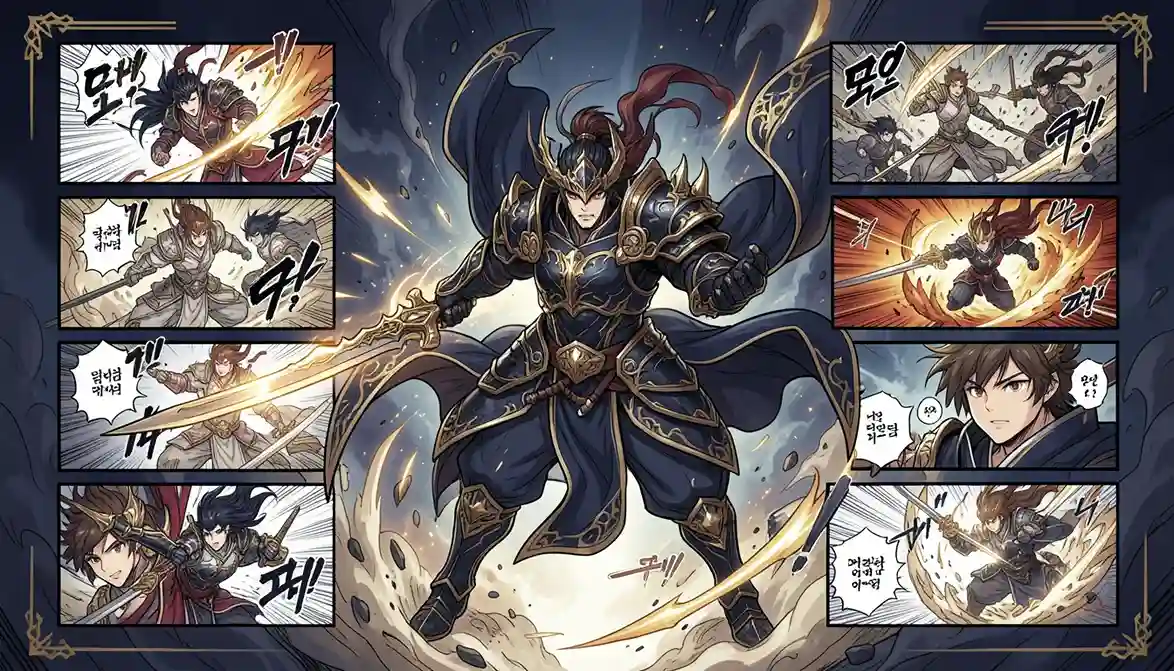
You keep seeing the word everywhere — on Reddit threads, webtoon apps, anime forums, and TikTok recommendations. But what exactly is manhwa, and why has the entire world suddenly become obsessed with it? This guide covers everything: the history, the best titles, the top platforms, and exactly how manhwa is different from manga. By the end, you will know where to start and what to read first.
What Is Manhwa, Exactly?
The word manhwa (만화) literally means “comics” or “cartoon” in Korean. It is the umbrella term for the entire Korean comics medium — covering everything from old newspaper strips to bound graphic novels to the long-form digital series that dominate global reading apps today.
Traditional manhwa was printed in black and white, read left-to-right, and sold in Korean bookstores or serialized in print magazines. The webtoon, a full-color, vertically scrolling digital comic created especially for smartphones, is currently the most popular format. This shift happened in the early 2000s and completely transformed how Korean comics reach readers worldwide.
Quick answer: Manhwa = Korean comics. The modern version is usually a full-color, vertically scrolling digital series called a webtoon. Most major titles are free to read online.
The History of Korean Comics: From Print to Planet
Manhwa traces its roots to early 20th-century newspaper cartoons published during the Japanese colonial period (1910–1945). Political satire, social commentary, and humor drove the earliest Korean comics. After Korea’s liberation in 1945, the medium expanded rapidly through independent publications and children’s magazines.
The 1950s and 1960s brought a golden age of print manhwa. Rental comics shops — called manhwa-bang — spread across Korean cities. Readers paid a small fee to sit and read stacks of volumes, a cultural institution that shaped the reading habits of an entire generation.
Then came 1997. The Asian financial crisis hit South Korea hard. Publishers cut budgets, artists lost income, and the print manhwa industry nearly collapsed. Out of that crisis came an unexpected solution: the internet. Artists began posting work online for free, building audiences through portals like Daum and later Naver. Naver Webtoon launched in 2004 and changed everything — for Korean comics and for comics globally.
Manhwa vs Manga vs Manhua: What Is the Real Difference?
Readers new to Asian comics often mix these three up. They share a common Chinese-character root (漫画), but they are distinct traditions with their own styles, markets, and storytelling conventions.
| Feature | Manhwa (Korean) | Manga (Japanese) | Manhua (Chinese) |
|---|---|---|---|
| Reading direction | Left to right | Right to left | Left to right |
| Color | Usually full color | Usually black and white | Often full color |
| Format | Vertical scroll, digital | Bound volumes | Mixed print and digital |
| Art style | Soft, expressive, detailed backgrounds | Varied, large expressive eyes | Influenced by both traditions |
| Update model | Weekly episodes, free online | Magazine serialization | Platform-based updates |
| Major platforms | Webtoon, Tapas, Kakao | Shonen Jump, Crunchyroll | Bilibili Comics, Kuaikan |
The biggest practical difference for new readers: manhwa webtoons are built for vertical scrolling on a phone screen. No page flipping, no panel confusion — you scroll down. This makes the format the easiest entry point into Asian comics for a brand new reader.
What Are the Best Manhwa Genres to Start With?
Nearly every genre is covered by manhwa, and Korean artists frequently combine genres in novel ways. These categories attract the most new readers globally:
Fantasy and Isekai — A hero gets reborn or transported into another world, often with hidden powers and a leveling system. This is the most popular genre in manhwa by a wide margin.
Romance — Set in modern Seoul or historical Joseon Korea. Korean romance manhwa tends to be emotionally honest, slow-burning, and visually beautiful.
Action and Hunter — Dungeon raids, monster fights, and characters who grow stronger through each battle. Solo Leveling defined this genre for a global audience.
Horror and Thriller — Psychological horror with the emotional intensity of a K-drama. Korean artists excel at building dread slowly before delivering shocking payoffs.
Slice of Life — Everyday Korean life, career struggles, social pressure, and relationships. These stories feel personal and honest in ways that resonate across cultures.
Historical (Sageuk) — Stories set during the Joseon Dynasty era (1392–1897), drawn with careful attention to costume, palace politics, and social hierarchy.
The fantasy and action genres dominate global rankings, largely driven by the “regression” narrative — a character dies and gets a second chance at life, armed with knowledge of the future. Korean manhwa artists perfected this storytelling hook, and it has since spread across the entire Asian comics industry.
How Did Webtoons Transform the Manhwa Industry?
The webtoon format did not just change how manhwa looked — it restructured the entire business model behind Korean comics.
Before webtoons, artists depended on publishers, print runs, and physical retail distribution. After webtoons, an artist could upload directly to a platform, build a massive readership, and earn income through in-app coin systems, ad revenue, or merchandise — with no publisher gatekeeping the process.
Over 85 million people utilize the platform Naver Webtoon (now known as WEBTOON worldwide) each month. Tens of millions more are added by Tapas, LINE Webtoon, and Kakao Webtoon. This audience size rivals major streaming services in terms of weekly engagement — fans read every episode the day it drops, leave comments, and follow artists across social media with intense loyalty.
The vertical scroll format also gave manhwa artists a unique storytelling tool that manga artists never had. Because readers scroll at a natural pace, artists design tension and comedy into the exact moment a new panel enters the screen. The reveal happens as you scroll — not as you flip a page. This makes modern manhwa feel cinematic in a way that print never achieved.
Top Manhwa Titles That Beginners Actually Finish
The best entry point into manhwa is a title that hooks you immediately, updates consistently, and rewards continued reading. These series appear on nearly every beginner recommendation list for good reason:
Solo Leveling — An E-rank hunter — the weakest player — rises to become the most powerful being in the world. The art quality alone makes this worth reading. The 2024 anime adaptation brought millions of new fans back to the original manhwa.
Tower of God — A boy climbs an infinite tower to find the girl he loves. One of the most ambitious world-building projects in manhwa history, with a dedicated global fanbase.
The God of High School — A high school fighting tournament that quickly escalates into divine powers, ancient mythology, and global stakes. Fast-paced and visually explosive from the first chapter.
Lore Olympus — A retelling of the Persephone and Hades myth in a stylized modern world. The pastel art style is unlike anything else in manhwa, and the emotional storytelling is genuinely powerful.
True Beauty — A romance about makeup, confidence, and social identity. Honest, funny, and deeply relatable for anyone who has ever felt pressure to look a certain way.
Omniscient Reader’s Viewpoint — A man who read every single chapter of an obscure web novel suddenly finds himself living inside that story. One of the smartest premises in recent manhwa.
Where Can You Read Manhwa Online — Free and Paid Options
Finding quality manhwa is easier than it has ever been. These are the most trusted and widely used platforms:
| Platform | Free Tier | Paid Model | Best For |
|---|---|---|---|
| WEBTOON (Naver) | Yes — most series free | Coins for early access | Widest selection across all genres |
| Tapas | Yes — ad-supported | Ink coin system | Romance and indie titles |
| Kakao Webtoon | Limited free episodes | Coin purchases | Premium action and fantasy |
| MangaPlus | Yes | Subscription | Officially licensed titles |
| Crunchyroll Manga | No | Subscription bundle | Readers already on Crunchyroll |
Always choose licensed platforms. Piracy sites harm Korean artists directly — creators on platforms like WEBTOON earn based on view counts and paid reads. Every read on an official platform supports the people who make the stories you love.
Why Does Manhwa Reflect Korean Culture So Deeply?
Manhwa is not just entertainment. It functions as a cultural document. Stories set in modern Korea capture the intense pressure of academic entrance exams (수능, su-neung), the rigid hierarchies of corporate office life, the complex beauty standards that Koreans navigate daily, and the ongoing tension between traditional Confucian values and modern individual identity.
Historical manhwa — called sageuk manhwa — reconstructs the Joseon Dynasty with meticulous attention to court costume, palace politics, and class hierarchy. These series work as great stories and informal history lessons simultaneously. Many Korean students describe sageuk manhwa as their first real engagement with their own country’s history.
This cultural specificity is exactly what makes manhwa feel genuinely fresh to international readers. The emotions are universal — love, ambition, grief, shame — but the settings and social dynamics feel like a window into a world most readers had never seen before.
How Did Manhwa Become a Global Phenomenon?
Three forces drove manhwa’s rise beyond Korea: Hallyu (the Korean Wave), the smartphone, and the free-to-read model.
Hallyu — the global spread of K-pop, K-dramas, and Korean food — created worldwide curiosity about Korean culture broadly. Readers who fell in love with dramas or discovered BTS naturally became curious about other Korean creative media. The cultural appetite was already building before manhwa broke through internationally.
Smartphones made the vertical-scroll webtoon format feel native and intuitive rather than awkward. Readers did not need to learn anything new — they just opened an app and scrolled down, exactly as they do with every other piece of content on their phones.
The free-to-read model removed every barrier to trying a new series. No commitment, no purchase, no specialty bookstore required. Open the app, pick a title, start reading.
By 2023 and 2024, multiple manhwa titles received major anime adaptations — Solo Leveling, Tower of God Season 2, The God of High School — bringing millions of new readers back to the original Korean comics. The pipeline between manhwa and anime is now one of the most active creative corridors in all of Asian entertainment.
Collecting Physical Manhwa: What You Need to Know
Digital reading is the default experience, but physical manhwa volumes have their own devoted collector community. Publishers like Seven Seas Entertainment, Yen Press, and Viz Media license and print English-language manhwa volumes with high production quality.
Physical volumes typically release after a digital series is well established, so expect to wait one to two years for print editions of popular webtoons. When they arrive, they usually include:
- Pages reformatted for book binding rather than vertical scroll
- Color covers and sometimes full-color interior sections
- Bonus content including creator notes, rough sketches, and alternate cover galleries
- Premium limited editions with slipcovers, foil treatments, and exclusive art for top titles
Limited-edition releases of titles like Solo Leveling and Omniscient Reader’s Viewpoint sell out within hours of going on sale. If you plan to collect seriously, set pre-order alerts and follow publisher social media accounts closely.
Frequently Asked Questions About Manhwa
Is manhwa the same as manga?
No. Manhwa is Korean and manga is Japanese. They share the same Chinese-character root word but are completely separate traditions with different art styles, reading directions, publishing systems, and cultural contexts. Manhwa reads left to right and is mostly digital and full-color today. Manga reads right to left and is traditionally black and white in print volumes.
What is the best manhwa for a complete beginner?
Solo Leveling for action and fantasy readers, or Lore Olympus for romance and emotional storytelling. Both are available free on WEBTOON. Solo Leveling pulls you forward with extraordinary art and a relentless pace. Lore Olympus wins readers over with its soft painted style and deeply human story.
Where can I read manhwa for free legally?
WEBTOON is the best free legal option. The WEBTOON app and website offer thousands of manhwa series free with ads, or you can pay coins for early episode access. Tapas is another solid free platform. Avoid piracy sites — they deprive Korean artists of income and typically offer poor translation quality.
Why is manhwa so popular right now?
Free access, original storytelling, and the Korean Wave together created the perfect conditions for manhwa to reach a global audience. The webtoon model makes manhwa free or very cheap to try. Korean artists developed narrative ideas — regression, hunter systems, dungeon leveling — that feel completely fresh to Western readers. And the global success of K-dramas and K-pop drove curiosity about all Korean creative media.
Are manhwa webtoons and manhwa the same thing?
Webtoons are a type of manhwa, but not all manhwa are webtoons. “Manhwa” covers the full Korean comics tradition including older print formats. “Webtoon” refers specifically to the vertically scrolling digital format that now dominates the industry. When people say “manhwa” in casual conversation today, they almost always mean webtoons.
Can I buy manhwa in physical book form outside Korea?
Yes. Publishers like Seven Seas Entertainment and Yen Press release English manhwa volumes that are available on Amazon and at major bookstores worldwide. Print editions typically arrive one to two years after a digital series establishes itself online. Solo Leveling, Tower of God, and True Beauty all have ongoing English print runs.
Start Reading Manhwa Today
Manhwa is one of the most accessible, visually stunning, and emotionally honest storytelling mediums in the world right now. The stories are original, the art is extraordinary, and thousands of series are completely free to read starting today.
Pick one title from this guide, open WEBTOON or Tapas, and read the first three episodes. That is all it takes. Most readers who try manhwa once never stop.
If you want a personalized recommendation based on what you already love — books, anime, games, movies — drop your preferences in the comments below. Pointing readers to their perfect first manhwa series is something this site genuinely enjoys doing.
Sources: Naver Webtoon Platform Reports | Korean Culture and Information Service (KOCIS) | Korea Creative Content Agency (KOCCA) Manhwa Industry White Paper | Publishers Weekly Asian Comics Coverage 2023–2024 | Seven Seas Entertainment & Yen Press Licensed Catalogs